Botanical & Common Names
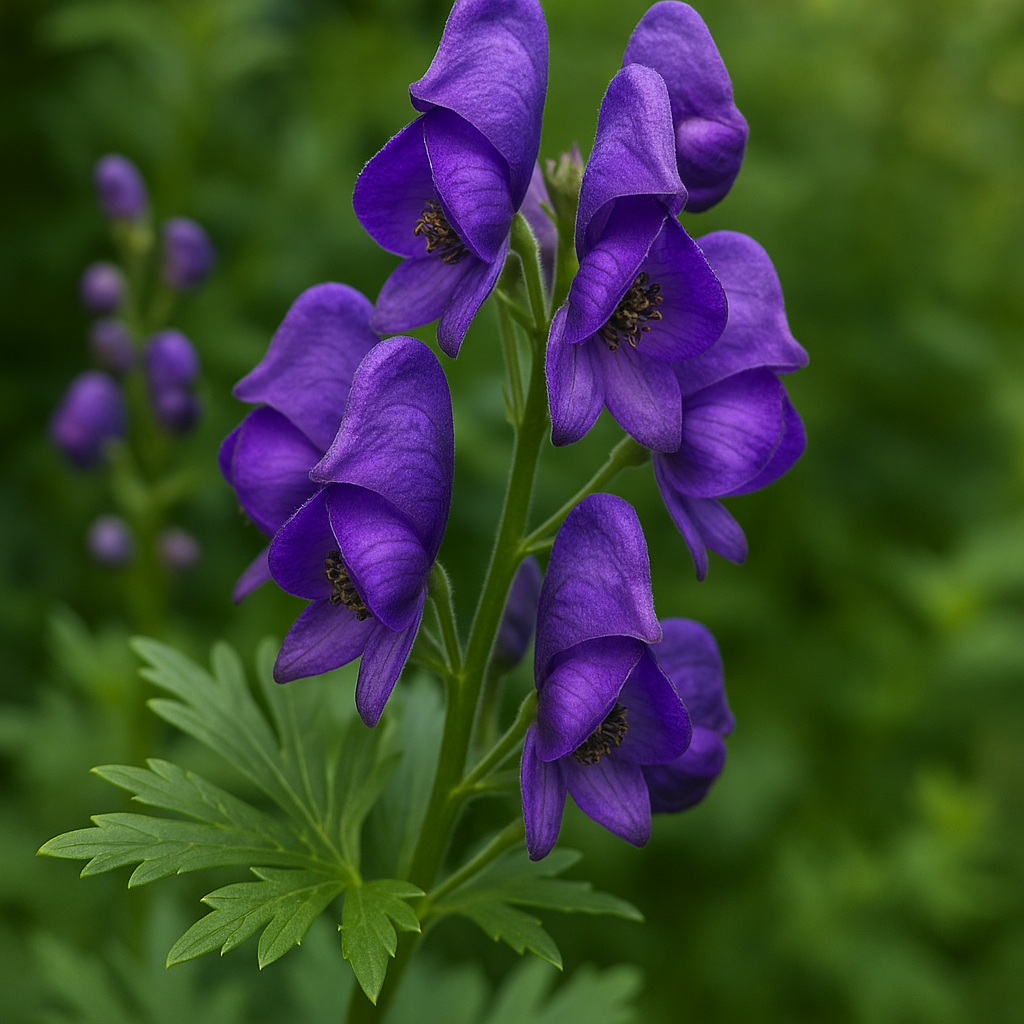
Latin / Scientific Name: Aconitum spp. (includes species such as Aconitum napellus)
Common Names: Aconite, Monkshood, Wolfsbane, Devil’s Helmet, Queen of Poisons
Family: Ranunculaceae (buttercup family)
Origin & History
Aconite grows naturally in cool, mountainous regions throughout Europe and Asia. It has a long and infamous reputation, used historically as both a medicine and a poison. Ancient cultures once used it to coat arrow tips in hunting and warfare, while traditional Chinese medicine used carefully processed forms for severe pain and certain cold conditions.
Despite its striking beauty, Aconite has always demanded caution; it’s a plant that commands respect, not experimentation.
Qualities & Traditional Use
In herbal systems, Aconite has been described as warming, penetrating, and powerful. Processed extracts were once used to support circulation and relieve nerve pain, but only in extremely small, controlled doses. The active compounds act quickly in the body, influencing both the nervous and cardiovascular systems, which is exactly why unsupervised use can be dangerous.
Your Healing Begins Here
These guides focus on real women’s health challenges such as hormonal imbalance, mental wellness, inflammation, and everyday physical discomfort.
If you’re ready to stop searching for answers and start following a clear healing plan, these guides will help you take the first step on your wellness journey.
Toxic Components & Mechanism
The danger in Aconite lies in its alkaloids, mainly aconitine. These compounds affect how nerves and heart muscles communicate by disrupting sodium channels in cells. While that can dull pain in tiny, precise doses, even a small overdose can interfere with breathing, heartbeat, and muscle control, often with fatal results.
Risks, Dangers & Side Effects
Aconite is one of the most toxic herbs known to herbal medicine.
Poisoning can occur from swallowing, touching, or even preparing the raw plant. Early symptoms include tingling or numbness in the mouth and hands, dizziness, nausea, and irregular heartbeat. Severe poisoning may lead to muscle weakness, respiratory failure, or death.
Even topical exposure can be risky for sensitive individuals, as the toxins can absorb through the skin.
Contraindications & Who Should Avoid It
Aconite should never be used without professional medical supervision.
Avoid use if you are:
- Pregnant or breastfeeding
- Living with heart disease, arrhythmia, or low blood pressure
- Managing neurological disorders
- Taking anticoagulant (blood-thinning) medications
- Under 18 years old or elderly
Best Practices / Precautions
- Never use the raw or unprocessed root. Only use professionally prepared extracts designed for clinical use.
- Always start with the lowest possible dose under trained supervision.
- Discontinue immediately if you experience tingling, numbness, chest tightness, or shortness of breath.
- Keep all Aconite products locked away from children and pets.
- Do not mix with other strong herbs or medications that affect the heart or nervous system.
Summary
Aconite is a plant of dual nature, powerful yet perilous. It serves as a reminder that not all that grows from the earth is meant to be used freely. Respect its potency, understand its risks, and remember: true wellness never comes from reckless use of power, but from informed and intentional care.
References
- pmc.ncbi: Aconitum spp. Monograph
- National Library of Medicine (PMC): Aconite Poisoning Case Reports and Mechanisms
- Journal of Ethnopharmacology: Aconite Alkaloid Pharmacology and Toxicity Review
- White Rabbit Institute of Healing: Aconite (Fu Zi) Herbal Profile
Herbal Precautions Disclaimer- The information provided in this herbal precautions post is for educational purposes only and is not intended as medical advice. Herbal information shared through SheFit Wellness reflects traditional use, general research, and holistic education.