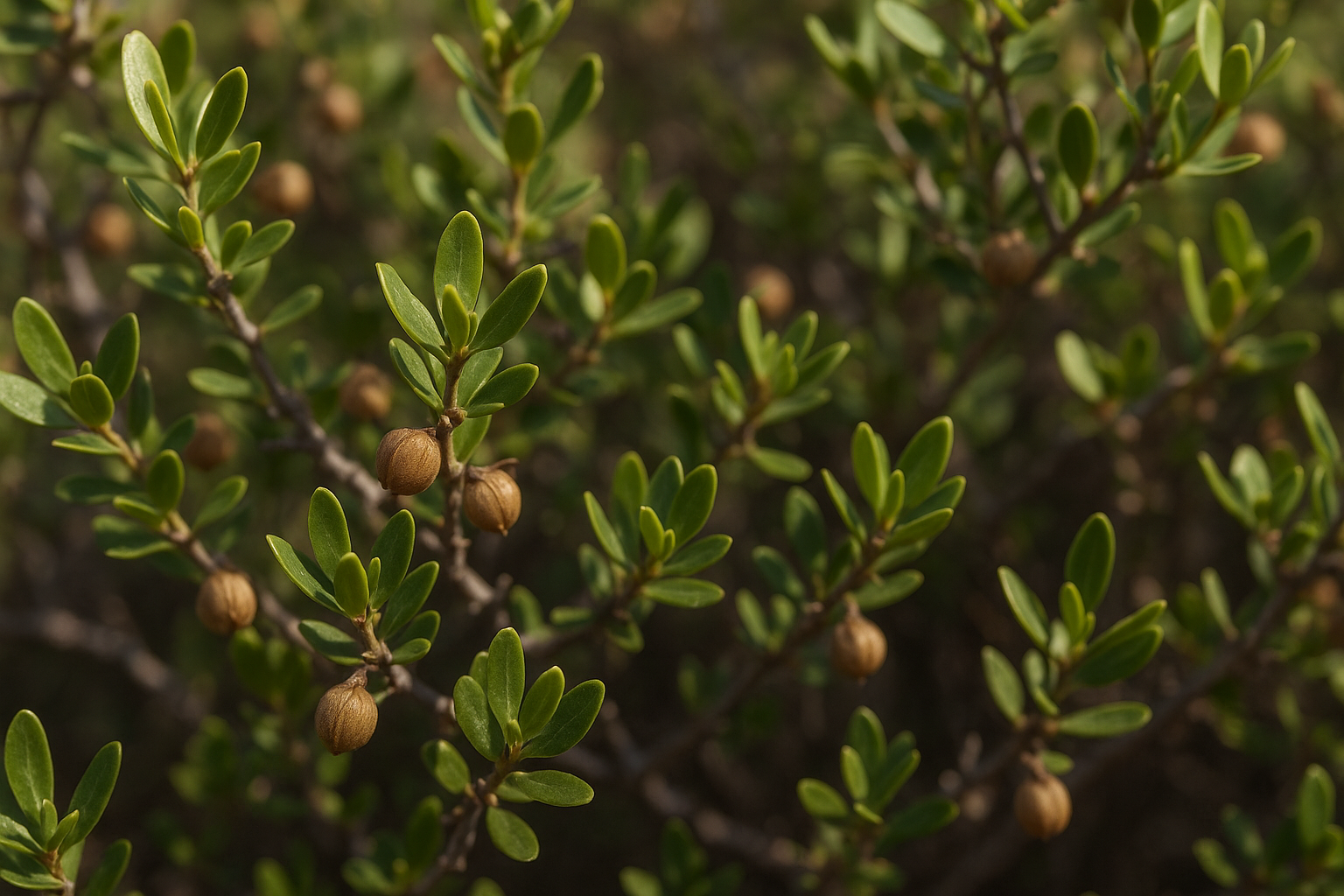
Botanical & Common Names
Latin / Scientific Name: Larrea tridentata
Common Names: Chaparral, Creosote Bush, Greasewood
Family: Zygophyllaceae
Origin & History
Chaparral is a hardy desert shrub native to the southwestern United States and northern Mexico. It thrives in arid environments and has been revered for centuries by Indigenous peoples, particularly the Pima and Cahuilla tribes, who used it in poultices and teas for its antimicrobial and anti-inflammatory effects. Its resinous leaves have a distinctive tar-like scent, earning it the name “creosote bush.” Traditionally, it was used to treat colds, rheumatism, infections, and even cancer, though these uses have since been scrutinized due to concerns about toxicity.
Qualities & Traditional U
Chaparral contains strong antioxidant and antimicrobial properties attributed to its unique chemical makeup. Historically, it has been used as a tonic for cleansing the blood, purifying the system, and supporting skin and respiratory conditions. Some herbalists once promoted Chaparral as a “detox” herb for removing heavy metals or slowing tumor growth. However, because of its potent nature, internal use of Chaparral has fallen out of favor due to safety concerns.

Your Healing Begins Here
These guides focus on real women’s health challenges such as hormonal imbalance, mental wellness, inflammation, and everyday physical discomfort.
If you’re ready to stop searching for answers and start following a clear healing plan, these guides will help you take the first step on your wellness journey.
Toxic Components & Mechanism
The primary active compound in Chaparral is nordihydroguaiaretic acid (NDGA), a powerful antioxidant with both therapeutic and toxic potential. NDGA interferes with lipid peroxidation and cellular oxidation processes, but in high or prolonged doses, it can overwhelm the liver’s detoxification pathways, leading to hepatotoxicity. Chaparral’s resinous compounds are difficult for the body to metabolize, and accumulation can cause inflammation or damage within the liver and kidneys.
Risks, Dangers & Side Effects
Chaparral has been associated with serious liver injury, including hepatitis, liver failure, and death. Adverse reactions can occur even at modest dosages or after short-term use. Symptoms of toxicity include fatigue, nausea, jaundice, dark urine, and abdominal pain. In addition to liver damage, Chaparral may contribute to kidney inflammation and digestive irritation due to its resin content. The use of Chaparral in combination with other detox or cleansing regimens further heightens the risk of organ stress. Because NDGA interferes with essential cellular oxidation, long-term use can disrupt normal metabolic balance.
Contraindications & Who Should Avoid It
Avoid use if you are:
- Pregnant or breastfeeding
- Diagnosed with liver or kidney disease
- Taking medications metabolized by the liver (such as acetaminophen or prescription drugs for diabetes, cholesterol, or blood pressure)
- Undergoing chemotherapy or radiation therapy
- Using other herbs or supplements that have potential hepatotoxic effects
Chaparral is also contraindicated in individuals with autoimmune disorders or chronic fatigue, as its detoxifying effects can worsen symptoms or interfere with medications.
Best Practices / Precautions
Chaparral should never be used as a daily tonic or long-term supplement. If used externally, it should be limited to topical applications such as salves or poultices under the guidance of a qualified herbal practitioner. Internal use, including teas, tinctures, or capsules, should be avoided unless under direct professional supervision with close monitoring of liver function. Always ensure that any product containing Chaparral is labeled and tested for purity, as contamination or misidentification can increase the risk of toxicity.
Summary
Chaparral (Larrea tridentata) is one of the most controversial herbs in North American herbalism. While its antimicrobial and antioxidant compounds show promise in laboratory settings, real-world use has revealed severe safety issues, particularly concerning the liver. Despite its long history of traditional use, modern toxicological studies highlight that its risks far outweigh its benefits when taken internally. Chaparral serves as a reminder that even natural medicines require respect, moderation, and a full understanding of their physiological impact.
References
- National Center for Complementary and Integrative Health (NCCIH): Chaparral Overview
- National Library of Medicine (PMC): Chaparral-Induced Hepatotoxicity Case Review
- Journal of Ethnopharmacology: Toxicological Assessment of Larrea tridentata
- Healthline: Chaparral Uses, Benefits, and Dangers
- Drugs.com: Chaparral Monograph and Adverse Effects Summary
- Mount Sinai Health Library: Chaparral – Risks and Safety Concerns
- WebMD: Chaparral – Side Effects, Interactions, and Warnings
Herbal Precautions Disclaimer- The information provided in this herbal precautions post is for educational purposes only and is not intended as medical advice. Herbal information shared through SheFit Wellness reflects traditional use, general research, and holistic education.