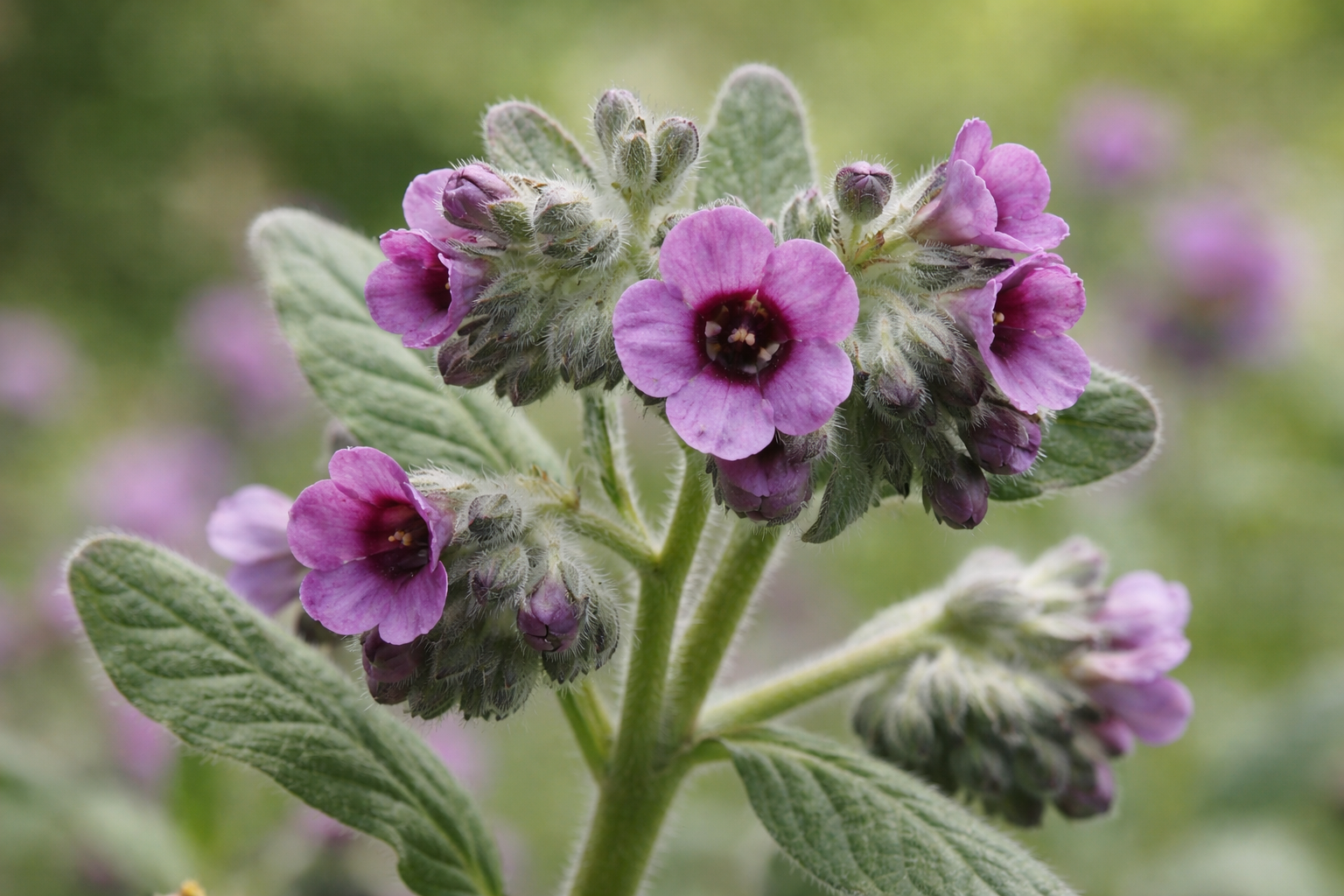
Botanical name: Cynoglossum officinale
Common name: Hound’s Tongue, Gypsy Flower, Beggar’s Lice, Dog’s Tongue, Rats and Mice (regional)
Plant family: Boraginaceae (Borage family)
This one is important because the Boraginaceae family includes multiple plants known for pyrrolizidine alkaloids, a compound group with a serious safety profile.
Origin & History
Hound’s Tongue is a biennial plant that’s been found across parts of Europe and is now widespread in North America, especially in disturbed areas, pastures, roadsides, and hayfields. It has a long folk-history of use in traditional herbal practices, mostly in topical or external preparations, and it has also been referenced in older herbal texts for issues like irritation or minor skin discomfort.
Modern toxicology has made it clear that this plant carries a real risk, especially when used internally or when it contaminates animal feed. Once it dries into hay, it doesn’t magically become safe, it can still harm.
Qualities & Traditional Use
Traditionally, Hound’s Tongue has been described in ways that make it sound “soothing” or “calming,” especially in external applications. Some people have used it in folk settings as a poultice or topical herb.
But at SheFit Wellness, we don’t ignore the reality behind an herb just because it has a history. Traditional use does not equal safe use, and with Hound’s Tongue, the risk profile is not light.
The biggest thing to understand is that this herb is associated with liver-damaging compounds that can build up over time. So even if someone doesn’t feel immediate symptoms, the body may still be taking a hit.
Your Healing Begins Here
These guides focus on real women’s health challenges such as hormonal imbalance, mental wellness, inflammation, and everyday physical discomfort.
If you’re ready to stop searching for answers and start following a clear healing plan, these guides will help you take the first step on your wellness journey.
Toxic Components & Mechanism
Hound’s Tongue contains pyrrolizidine alkaloids (PAs). These are compounds that can become toxic after the body metabolizes them, particularly in the liver. The mechanism that gets people in trouble is that certain PAs can convert into reactive metabolites that damage liver cells, interfere with normal cell division, and cause progressive injury over time.
In animal cases (which are heavily documented), PA poisoning is associated with characteristic liver changes like megalocytosis, fibrosis, and bile duct changes; basically the liver gets injured, tries to regenerate, and the repair process becomes distorted.
This matters for humans too, because PA exposure is a known food safety concern globally, and it’s one reason many PA-containing plants are treated with serious caution.
Risks, Dangers & Side Effects
Hound’s Tongue is a herb I do not consider a casual “try it and see” plant. The biggest concern is liver toxicity, which may show up after repeated use or higher exposure.
Potential risks and side effects include:
- Liver injury (dose-dependent and cumulative)
- Jaundice (yellowing eyes/skin), fatigue, weakness (classic liver stress signs)
- Digestive upset and systemic illness symptoms reported in poisoning scenarios
- Delayed toxicity: symptoms may appear days to months later depending on exposure pattern
One of the scariest things about PA exposure is that the damage can be progressive. People can feel “fine” until they aren’t.
Contraindications & Who Should Avoid It
At SheFit Wellness, this is my protective line in the sand:
Avoid internal use of Hound’s Tongue—especially if any of the following apply:
- Pregnant women or those trying to conceive (liver stress + safety unknown is not worth it)
- Breastfeeding women
- Children and teens
- Anyone with existing liver conditions or a history of elevated liver enzymes
- Anyone taking medications processed heavily through the liver (talk to a clinician/pharmacist)
- Anyone using other herbs/supplements known to stress the liver
Also, people forget this: “natural” products can be contaminated. PA exposure is a real issue in the supplement world and food chain, which is why source quality matters.
Best Practices / Precautions
If you see Hound’s Tongue in an herbal formula, tea blend, or “old school” recommendation, this is what I want you to do:
- Do not ingest it. Period. The risk-to-reward ratio is not in your favor.
- If it’s being suggested for topical use, treat it like a “high caution herb” and still use discretion, especially if you have broken skin or sensitive conditions.
- Prioritize PA-free choices for women’s wellness work. There are safer herbs for nervous system support, hormone balance, inflammation, and mood stability that don’t come with this type of liver concern.
- If you suspect exposure (especially through questionable supplements), pay attention to fatigue, dark urine, upper right abdominal discomfort, itching, or yellowing skin/eyes, and seek medical evaluation.
Summary
Hound’s Tongue (Cynoglossum officinale) is not a “soft herb.” It contains pyrrolizidine alkaloids, compounds associated with serious liver toxicity and delayed harm. The traditional history doesn’t cancel the modern evidence.
At SheFit Wellness, we heal intentionally. And intentional healing includes saying: some herbs are not worth the risk.
Let’s normalize being educated, being cautious, and building a women’s wellness community that protects our bodies, not pressures us to experiment on them.
References
- Merck Veterinary Manual. (n.d.). Pyrrolizidine alkaloidosis in animals.