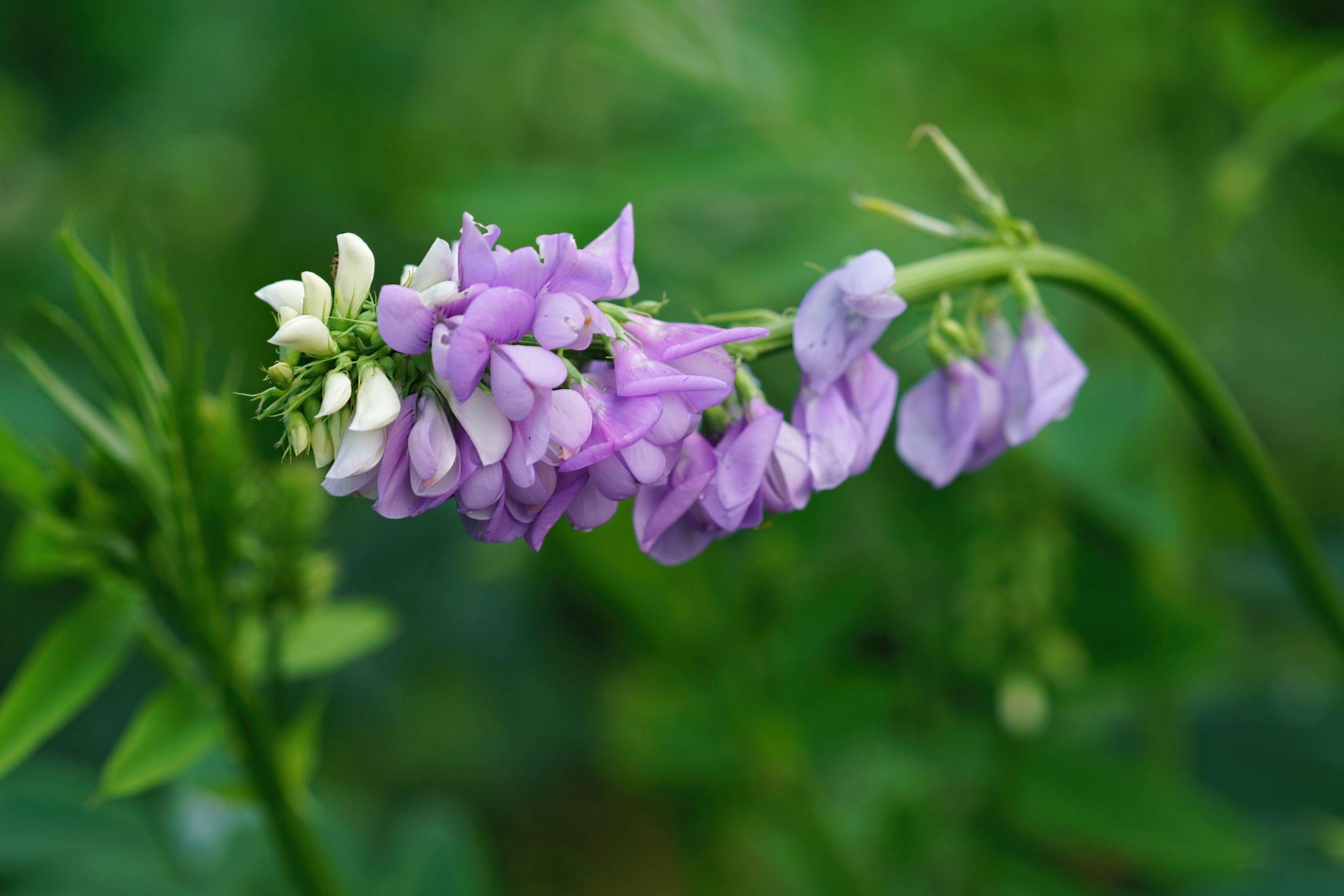
Botanical Name: Galega officinalis L.
Common Names: Goat’s Rue, French Lilac, Italian Fitch, Galega, Professor Weed
Plant Family: Fabaceae (Legume or Pea Family)
Goat’s Rue (Galega officinalis) is native to Southern and Central Europe, as well as parts of Western Asia and the Mediterranean region, where it grew naturally along riverbanks, grasslands, and moist open fields. Historically, the plant was cultivated as a forage crop for livestock due to its rapid growth and nitrogen enriching properties within the soil.
Origin & History
Goat’s Rue originally grew in parts of Europe and Western Asia, especially around damp fields and riverbanks. Farmers first noticed this plant because animals that ate it sometimes produced more milk. Because of this, early herbal healers began using the plant to support milk production in nursing mothers.
Over time, herbal practitioners also used Goat’s Rue for symptoms linked to high blood sugar, such as constant thirst and frequent urination. Later, scientists studied compounds inside the plant and discovered chemicals that helped lower blood sugar levels. These discoveries eventually helped inspire modern diabetes medications.
Even though Goat’s Rue played an important role in early medicine, modern safety reviews raised concerns about how strong and potentially dangerous the plant can be when used incorrectly.
Qualities & Traditional Use
Historically, Goat’s Rue was viewed as an herb that influenced metabolism and fluid balance within the body. Herbal practitioners believed it could encourage milk flow, support digestion, and help regulate sugar levels. These traditional uses caused the plant to gain popularity in earlier herbal systems.
Modern understanding, however, shows that Goat’s Rue acts strongly on blood sugar regulation. Herbs that directly influence glucose levels must be approached carefully because even small changes can place stress on the body. What was once seen only as supportive is now understood to carry measurable physiological risk.
Your Healing Begins Here
These guides focus on real women’s health challenges such as hormonal imbalance, mental wellness, inflammation, and everyday physical discomfort.
If you’re ready to stop searching for answers and start following a clear healing plan, these guides will help you take the first step on your wellness journey.
Toxic Components & Mechanism
Goat’s Rue contains natural substances known as guanidine compounds. These chemicals directly affect how the body manages glucose and insulin activity. While this action helped researchers better understand blood sugar control, it also explains why the herb can become dangerous.
When blood sugar drops too quickly or too far, the brain and nervous system may not receive enough fuel to function properly. This condition, known as hypoglycemia, can occur unexpectedly when strong metabolic herbs are used without proper dosing or monitoring. Fresh forms of the plant are considered especially risky because toxin levels may be higher and less predictable.
Risks, Dangers & Side Effects
Use of Goat’s Rue has been associated with serious safety concerns. Individuals exposed to excessive amounts may experience dizziness, weakness, sweating, confusion, or shaking caused by falling blood sugar levels. Digestive discomfort and headaches have also been reported. In more severe situations, dangerously low blood sugar may lead to fainting or medical emergency.
Historical reports of livestock poisoning after consuming large amounts of Goat’s Rue raised early warnings about its toxicity. These concerns helped shift modern herbal practice toward caution rather than routine use.
Contraindications & Who Should Avoid It
Goat’s Rue is not considered safe for many individuals. People living with diabetes or those taking medications designed to lower blood sugar face an increased risk of hypoglycemia if this herb is introduced. Pregnant women, breastfeeding mothers, children, and individuals preparing for surgery should avoid its use entirely. Those with existing metabolic or endocrine conditions may also experience unpredictable reactions.
The German Commission E, one of the most respected scientific review boards for herbal medicine safety, does not recommend Goat’s Rue for medicinal use due to concerns regarding toxicity and the absence of established safe dosing guidelines. This decision reflects modern caution surrounding the plant’s risk profile.
Best Practices / Precautions
Because Goat’s Rue has strong metabolic effects, self-treatment is strongly discouraged. Herbal preparations affecting blood sugar should only be considered under qualified supervision where monitoring is possible. Combining Goat’s Rue with pharmaceutical glucose-lowering treatments significantly increases the chance of harmful outcomes.
Responsible herbal care means recognizing when an herb may be too powerful for general wellness use. In many cases, safer alternatives exist that provide supportive benefits without placing the body at unnecessary risk.
Summary
Goat’s Rue holds an important place in herbal history and contributed valuable knowledge to modern medicine. However, its strength is also its greatest concern. The compounds that once made the herb medically interesting also make it potentially dangerous when used outside controlled conditions.
For this reason, Goat’s Rue is not recommended for casual or unsupervised herbal use. True holistic healing focuses not only on what can help the body, but also on avoiding substances that may create harm.
References
- German Commission E Monograph — Goat’s Rue Herb
- E-Lactation Safety Database
- Drugs.com Herbal Supplement Monograph
- WebMD Herbal Supplement Overview
- Goat’s rue: Benefits, Side Effects & Research | Herbal Reality