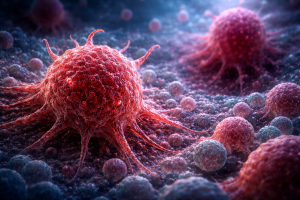
Breast cancer is the most common cancer among women, affecting approximately one out of every eight women in their lifetime. Although it primarily affects women, it can also occur in men.
Symptoms may include:
- A lump or thickening in the breast
- Clear, bloody, or yellow discharge from the nipple
- In rare cases, breast pain
Cancerous breast lumps are typically hard, firm, and do not shrink over time.
Risk factors include family history, smoking, alcohol consumption, radiation exposure, postmenopausal status, obesity, and prolonged exposure to female hormones such as estrogen.
A diagnosis of breast cancer is not just physical. It is emotional. It is hormonal. It is metabolic. It is systemic.
Healing conversations must reflect that complexity.
Understanding What’s Happening in the Body
Breast cancer is not simply a localized issue in the breast tissue. It involves hormonal signaling, gene regulation, immune response, and metabolic balance.
One of the major players in breast cancer development and recurrence is estrogen. Higher levels of circulating estrogen have been associated with recurrence and resistance to certain treatments. Estrogen stimulates cellular growth. When that stimulation becomes excessive, regulatory systems inside the body can become overwhelmed.
Two critical genes involved in tumor suppression are:
- P53, often described as a molecular patrolman. It monitors cells and prevents genetically defective cells from multiplying.
- P21, which acts earlier in the process and helps stop abnormal cells before they even trigger the p53 alarm system.
Excess estrogen can stimulate so much cellular growth that p53 cannot effectively keep up with defective cell replication. Reducing estrogen dominance allows these protective mechanisms to function more efficiently.
Metabolic dysfunction also plays a role. Elevated insulin levels from excessive sugar and starch intake can accelerate cellular growth processes, including cancer cell proliferation.
Breast cancer is influenced by:
- Hormonal imbalance
- Chronic inflammation
- Insulin dysregulation
- Obesity and metabolic disorder
- Nutrient deficiencies
This is why healing cannot focus on one pathway alone.
Root Causes & Contributing Factors
Estrogen dominance
Higher circulating estrogen levels stimulate excessive cellular growth and may increase recurrence risk.
• Obesity and excess body fat
Adipose tissue produces estrogen. Increased body fat contributes to hormonal imbalance and metabolic disorders, including diabetes and heart disease, which are also associated with recurrence risk.
• Insulin spikes from sugar and starch overconsumption
Binge eating sweets and refined carbohydrates can trigger massive insulin release, potentially accelerating cancer cell growth.
• Alcohol consumption
Alcohol can elevate estrogen levels and increase risk.
• Smoking and radiation exposure
Both increase cellular stress and DNA damage.
• Low beta-carotene levels
Women with breast cancer often have lower blood levels of beta-carotene, suggesting antioxidant status may matter.
• Poor dietary fat quality
Certain fats may promote cancer development, particularly in premenopausal women.
SheFit’s Holistic View
Breast cancer is not simply an isolated malfunction in breast tissue. It reflects a deeper imbalance within the body’s regulatory systems. Hormones communicate constantly with cells, and cells respond according to the signals they receive. When estrogen signaling becomes excessive, particularly in estrogen-sensitive breast tissue, it can stimulate rapid cellular growth. That growth alone is not the issue, growth is normal, but when it outpaces the body’s ability to regulate and correct abnormal cells, risk increases.
The tumor suppressor genes p53 and p21 play critical roles in this regulation. P53 functions as a molecular patrol system, identifying genetically defective cells and preventing them from multiplying. P21 acts earlier in the chain, slowing or stopping abnormal cell transformation before it escalates. However, when estrogen-driven stimulation is persistent and excessive, these protective systems can become overwhelmed. It is not that the body lacks defense; it is that the signaling environment may be too aggressive for the regulatory systems to keep up.
Metabolic health also influences this environment. Elevated insulin levels from chronic sugar and starch overconsumption create additional growth signals. Obesity compounds the issue by increasing estrogen production through adipose tissue. Chronic inflammation, often driven by poor diet, stress, and environmental exposure, further weakens immune regulation. The body operates as a network, and when multiple pathways—hormonal, metabolic, inflammatory are disrupted simultaneously, the internal terrain becomes more permissive to abnormal cellular behavior.
Certain plant compounds have been studied for their interaction with these regulatory pathways. Isoflavones found in soy and kudzu have demonstrated activation of p21 in cell studies, suggesting possible early regulatory support. Beta-sitosterol, present in vegetable oils, has shown potential in reducing estrogen-stimulated breast cancer growth in laboratory research. Compounds such as resveratrol, found in red wine catechins, have been studied for their ability to influence estrogen signaling and cellular growth processes. These findings reinforce the importance of targeted, strategic botanical support rather than random supplementation.
Healing from a holistic perspective does not mean rejecting medical care. It means understanding that the body’s hormonal balance, metabolic function, detoxification pathways, and immune regulation all interact. Suppression alone is not the full conversation. Supporting internal balance, particularly estrogen metabolism, insulin regulation, inflammation control, and gene protection, creates an environment that strengthens the body’s natural regulatory capacity. Every system matters. Every pathway connects. And true healing must respect that complexity.
Supportive Considerations for Healing
Supporting the body through breast cancer requires addressing the internal environment that allows abnormal cells to thrive. This begins with metabolic balance and body composition. Maintaining a healthy body weight is not about aesthetics, it is about hormone regulation. Adipose tissue produces estrogen, and excess body fat increases circulating estrogen levels, especially after menopause. This creates a hormonal environment that may support recurrence. Regular exercise helps regulate insulin levels, reduce inflammation, and improve immune response. Even moderate, consistent movement can shift metabolic patterns in a protective direction.
Dietary fat quality matters. Omega-3 fatty acids found in salmon, sardines, tuna, and other fatty fish support anti-inflammatory pathways and help counterbalance inflammatory signaling. Olive oil, particularly extra virgin olive oil, provides polyphenols that support cellular protection. In contrast, excessive intake of red meat, particularly processed varieties, has been associated with increased risk in some populations. Choosing the right fats is not about elimination; it is about strategic replacement.
Cruciferous vegetables deserve serious attention. Broccoli, cabbage, and other mustard-family plants contain powerful phytochemicals that support detoxification pathways. When broccoli is chewed raw, it releases sulforaphane, a compound studied for its potential cancer-protective properties. These vegetables assist the body’s natural ability to metabolize and clear excess estrogen. Increasing fiber intake daily further supports this process by improving bowel function, which plays a direct role in hormone elimination. Poor elimination can allow estrogen to recirculate rather than exit the body.
Antioxidant support is another layer of protection. Berries are rich in polyphenols that help reduce oxidative stress. Women with breast cancer have often been found to have lower circulating levels of beta-carotene, suggesting the importance of colorful fruits and vegetables in the diet. Garlic and onions contain sulfur compounds that assist detoxification pathways and immune balance. These foods are not magic cures, but they contribute to a terrain that is less favorable for abnormal cellular growth.
What must be limited is just as important as what should be added. Fried foods and heavily charred meats can introduce compounds associated with increased lifetime risk. Excessive sugar and refined starch consumption can cause insulin spikes, and elevated insulin is a growth signal in the body. Repeated surges may accelerate unwanted cellular proliferation. Alcohol consumption should be moderated, as it can increase circulating estrogen levels. Vitamin D status should also be considered, with appropriate medical guidance, since research continues to examine its role in cellular differentiation. Every supportive choice either strengthens regulation, or adds to systemic burden.
The Natural Way to Treat
Red Wine Catechins, particularly resveratrol, have been studied for their ability to interrupt cellular processes involved in tumor development and growth.
Resveratrol has demonstrated:
- Modulation of estrogen signaling pathways
- Anti-inflammatory properties
- Antioxidant protection
- Influence on cellular cycle regulation
It acts as a starter herb, not a stand-alone solution.
Breast cancer is complex. One compound cannot address hormone balance, inflammation, detoxification, immune modulation, and metabolic dysfunction simultaneously.
Red Wine Catechins should always be coupled with complementary herbs in a synergistic formula tailored to the individual’s hormonal status, metabolic health, and treatment history.
Ginseng has been associated in some studies with improved quality of life and survival outcomes. Isoflavone-containing herbs like soy and kudzu have shown gene-activating potential in laboratory settings. But context matters.
This is not a one-herb conversation.
This is a systems approach.
Guidance & Next Step
Breast cancer requires coordinated medical care. Natural support must complement, not replace, appropriate oncology treatment.
Herbal strategies can produce beneficial outcomes, but they can also cause harm when misused.
Every woman’s hormonal landscape is different.
Every metabolic profile is different.
Every treatment plan is different.
Red Wine Catechins may be a powerful starting point, but they are most effective when part of a carefully structured, synergistic herbal formula.
If navigating breast cancer or recurrence risk, consider requesting a custom herbal prescription designed specifically for this condition, tailored to hormonal status, metabolic health, and current treatment considerations.
Intentional healing requires precision.
And precision begins with personalization.
References
Bilal, I., Chowdhury, A., Davidson, J., & Whitehead, S. (2014). Phytoestrogens and prevention of breast cancer: Modulation of p53, p21, and cell cycle regulators. Journal of Steroid Biochemistry and Molecular Biology, 139, 1–10. https://pmc.ncbi.nlm.nih.gov/articles/PMC4129534/
Ko, J. H., Sethi, G., Um, J. Y., Shanmugam, M. K., Arfuso, F., Kumar, A. P., & Bishayee, A. (2017). The role of resveratrol in cancer therapy. International Journal of Molecular Sciences, 18(12), 2589. https://pmc.ncbi.nlm.nih.gov/articles/PMC5751192/
Schlachterman, A., Valle, F., Wall, K. M., Azios, N. G., Castillo, L., Morell, L., Washington, A. V., Cubano, L. A., & Dharmawardhane, S. (2008). Combined resveratrol, quercetin, and catechin treatment reduces breast tumor growth and metastasis. Cancer Prevention Research, 1(6), 500–510. https://pmc.ncbi.nlm.nih.gov/articles/PMC2510765/
Singh, B., Shoulson, R., Chatterjee, A., Ronghe, A., Bhat, N. K., & Bhat, H. K. (2014). Resveratrol inhibits estrogen-induced breast carcinogenesis through induction of protective gene pathways. Cancer Prevention Research, 7(9), 901–912. https://pmc.ncbi.nlm.nih.gov/articles/PMC4123650/
da Silva, F. C., de Oliveira, M. R., & Fernandes, P. A. (2023). Tailoring natural compounds for the treatment of luminal breast cancer: Focus on estrogen signaling pathways. Pharmaceuticals, 16(10), 1466. https://www.mdpi.com/1424-8247/16/10/1466
Herbal Precautions Disclaimer– The information provided in this post is for educational purposes only and is not intended as medical advice. Herbs may interact with medications or existing health conditions. Always consult a licensed healthcare professional before using herbal remedies, especially if you are pregnant, nursing, taking medications, or managing a medical condition.