
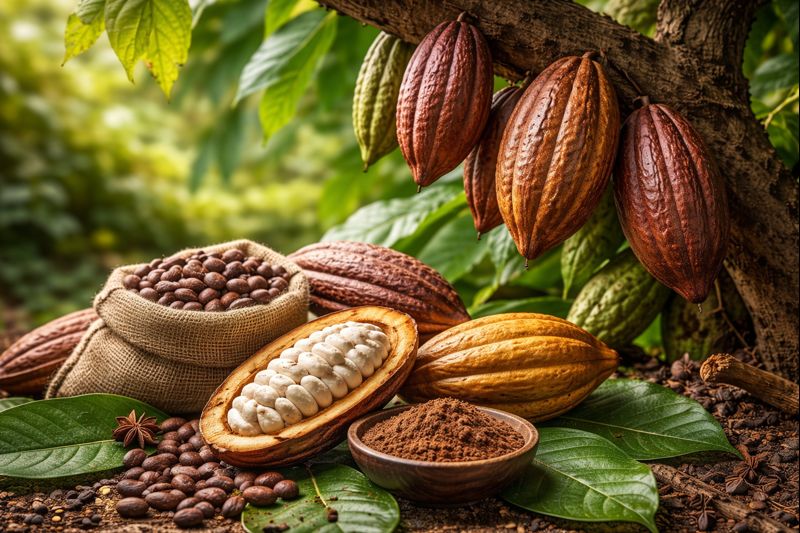
Latin / Scientific Name: Theobroma cacao
Common Names: Cocoa, Cacao, Chocolate Tree
Family: Malvaceae (Mallow family)
Origin & History
Cocoa originates from the tropical regions of Central and South America and has been cultivated for thousands of years, particularly by the Olmec, Maya, and Aztec civilizations. Historically, cacao was consumed as a bitter, ceremonial drink rather than the sweetened product common today. It was revered as both a sacred plant and a medicinal substance, often associated with vitality, mental clarity, emotional balance, and cardiovascular support.
The name Theobroma translates to “food of the gods,” reflecting the cultural and spiritual importance cacao held in ancient societies. Traditionally, cocoa was used to support stamina, mood, circulation, and cognitive function. Its medicinal reputation was rooted in its stimulating yet grounding effects on both the mind and body.
Qualities & Traditional Use
Cocoa is considered:
• Warming
• Stimulating
• Circulatory
• Uplifting
• Nervine
Traditionally, cocoa has been used to support:
• Mental alertness and mood elevation
• Cardiovascular and circulatory health
• Fatigue and low energy
• Emotional openness and heart-centered states
• Cognitive function
Cocoa’s effects are largely attributed to its influence on neurotransmitters and blood flow, making it both mentally stimulating and emotionally impactful.

Your Healing Begins Here
These guides focus on real women’s health challenges such as hormonal imbalance, mental wellness, inflammation, and everyday physical discomfort.
If you’re ready to stop searching for answers and start following a clear healing plan, these guides will help you take the first step on your wellness journey.
Toxic Components & Mechanism
Cocoa contains several bioactive compounds, including:
• Theobromine
• Caffeine (in smaller amounts)
• Phenethylamine (PEA)
• Flavonoids (catechins and epicatechins)
Theobromine and caffeine are methylxanthines that stimulate the central nervous system and cardiovascular system. Theobromine, in particular, increases heart rate, dilates blood vessels, and acts as a mild diuretic. Phenethylamine influences dopamine and serotonin pathways, contributing to cocoa’s mood-elevating effects.
While these compounds provide therapeutic benefits in moderate amounts, excessive intake can overstimulate the nervous system and strain the heart.
Risks, Dangers & Side Effects
Cocoa is widely consumed, but medicinal or concentrated use carries risks, especially for sensitive individuals.
Potential risks include:
• Nervous system overstimulation
• Increased heart rate or palpitations
• Anxiety or restlessness
• Headaches or migraines
• Gastrointestinal discomfort
High doses or frequent consumption may also interfere with sleep and exacerbate stress-related symptoms due to stimulant activity.
Contraindications & Who Should Avoid It
Cocoa should be used cautiously or avoided by individuals with conditions that are sensitive to stimulants or circulatory changes.
Caution is advised for individuals with:
• Anxiety disorders
• Heart rhythm irregularities
• High blood pressure
• Insomnia or sleep disorders
• Sensitivity to caffeine or stimulants
Cocoa’s stimulating effects may worsen symptoms when nervous system regulation is already compromised.
Avoid Use If You Are:
• Pregnant or breastfeeding in medicinal doses
• Highly sensitive to stimulants
• Managing cardiovascular conditions without supervision
• Experiencing chronic anxiety or panic symptoms
• Taking stimulant or antidepressant medications
Cocoa may amplify the effects of certain medications by influencing neurotransmitter activity.
Best Practices / Precautions
To use cocoa responsibly:
• Choose minimally processed cacao rather than sweetened chocolate
• Use small, intentional amounts
• Avoid consumption late in the day
• Monitor mood, sleep, and heart response
• Avoid stacking cocoa with other stimulants
Cocoa is best used occasionally and intentionally, not as a daily crutch for energy or mood regulation.
Summary
Cocoa is a powerful plant ally with a long history of ceremonial, emotional, and medicinal use. Its ability to stimulate circulation, elevate mood, and enhance cognitive function makes it valuable, but also potentially disruptive when overused. Cocoa’s stimulant properties demand awareness, moderation, and respect, particularly for individuals with nervous system or cardiovascular sensitivity.
At SheFit Wellness, cocoa is approached as a medicinal stimulant, not a harmless indulgence. Understanding its effects allows for conscious use that supports balance rather than undermines it.
References
- World Health Organization – Monographs on Medicinal Plants
- Natural Medicines Database – Cocoa / Cacao
- Botanical Safety Handbook – American Herbal Products Association
- Mills, S. & Bone, K. Principles and Practice of Phytotherapy
- National Center for Complementary and Integrative Health (NCCIH)
Herbal Precautions Disclaimer- The information provided in this herbal precautions post is for educational purposes only and is not intended as medical advice. Herbal information shared through SheFit Wellness reflects traditional use, general research, and holistic education.