Botanical & Common Names
Latin / Scientific Name: Tussilago farfara
Common Names: Coltsfoot, Coughwort, Butterbur, Horsehoof, Bull’s Foot
Family: Asteraceae
Origin & History
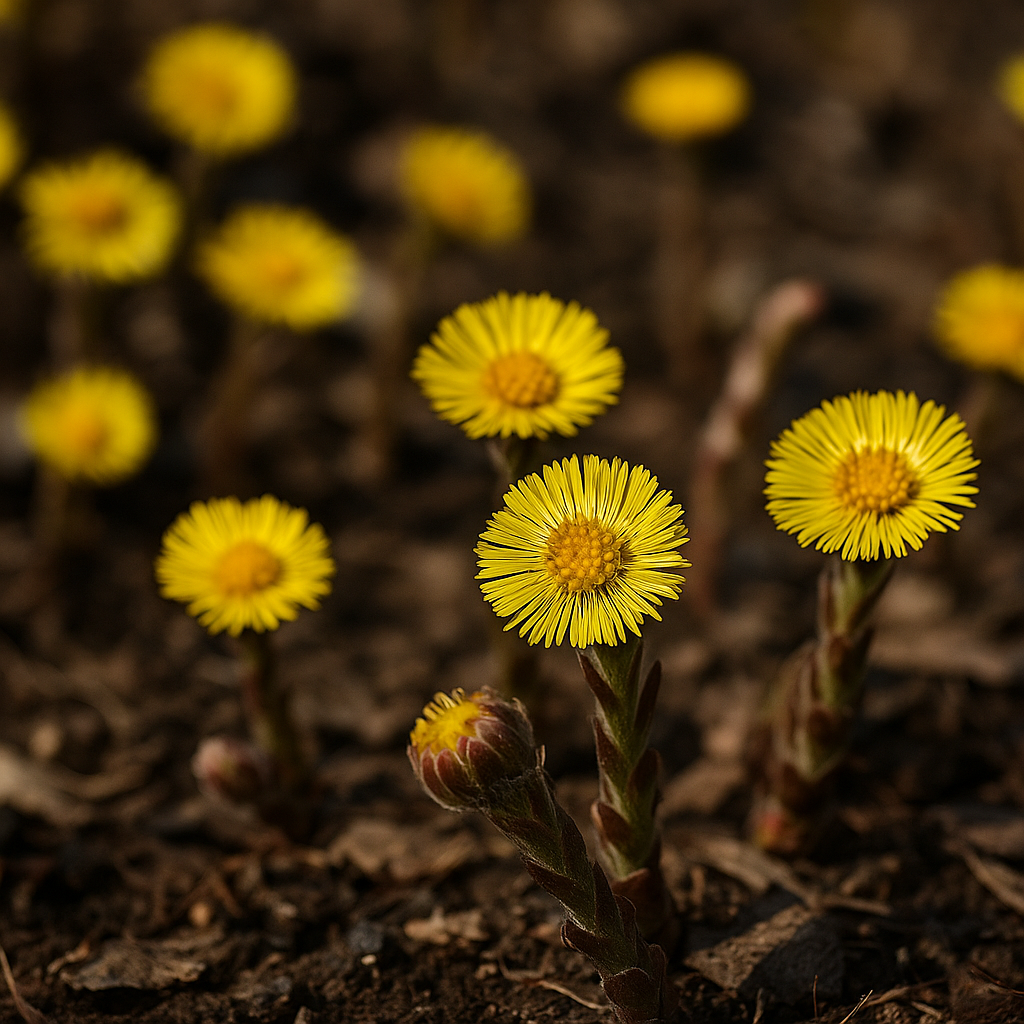
Coltsfoot is a perennial herb native to Europe and parts of Asia, now naturalized in North America. Its name comes from the shape of its leaves, which resemble a horse’s hoof. Historically, it has been a traditional remedy for respiratory issues, especially coughs, bronchitis, and asthma. Ancient Roman and Chinese herbal texts mention Coltsfoot as a “lung herb,” with its dried leaves once smoked or brewed into tea to ease congestion. Though long celebrated for its soothing effects on the lungs, modern research has revealed that its chemical composition demands cautious use.
Qualities & Traditional Use
Coltsfoot is known for its demulcent, expectorant, and anti-inflammatory properties. Traditional healers used it to calm irritated mucous membranes and ease persistent coughs. It was often combined with other herbs like licorice root or mullein in cough syrups and teas. The herb’s mucilage content coats the throat and airways, providing temporary relief from dry, hacking coughs. Despite these soothing qualities, its internal use has become controversial due to the presence of naturally occurring toxic compounds.

Your Healing Begins Here
These guides focus on real women’s health challenges such as hormonal imbalance, mental wellness, inflammation, and everyday physical discomfort.
If you’re ready to stop searching for answers and start following a clear healing plan, these guides will help you take the first step on your wellness journey.
Toxic Components & Mechanism
Coltsfoot contains pyrrolizidine alkaloids (PAs) , chemical compounds known to cause liver damage when metabolized by the body. These alkaloids can lead to hepatic veno-occlusive disease, a condition in which small veins in the liver become obstructed, resulting in scarring and potential liver failure. The toxic effects are cumulative, meaning that even small, repeated doses can cause harm over time. Although some modern preparations are marketed as “PA-free,” quality control varies widely, and the risk of contamination remains.
Risks, Dangers & Side Effects
The most significant risk associated with Coltsfoot is liver toxicity. Symptoms of poisoning may include fatigue, jaundice, abdominal pain, and loss of appetite. In severe cases, prolonged exposure to pyrrolizidine alkaloids can lead to cirrhosis or liver failure. There are also concerns about mutagenic and carcinogenic potential linked to these alkaloids. Infants and young children are especially vulnerable to PA toxicity, even from small exposures through herbal teas or syrups. Because the concentration of harmful compounds can vary between plants and batches, predicting a “safe dose” is difficult, if not impossible.
Contraindications & Who Should Avoid It
Avoid use if you are:
- Pregnant or breastfeeding (PAs can cross the placenta and enter breast milk)
- Diagnosed with any form of liver disease or impaired liver function
- Under the age of 12
- Taking prescription medications processed by the liver
- Managing chronic illnesses requiring long-term medication
Even “PA-free” products should be approached with caution, as mislabeling and cross-contamination remain common within the herbal supplement industry.
Best Practices / Precautions
If using Coltsfoot externally, such as in ointments or poultices for skin irritation, limit use to small areas and short durations. Internal use — including teas, syrups, or tinctures, is not recommended unless the product has been independently tested and certified as PA-free. When seeking respiratory support, consider safer herbal alternatives such as mullein, thyme, or marshmallow root. Always consult a qualified herbalist or healthcare provider before using Coltsfoot, especially for children or those with liver concerns.
Summary
Coltsfoot (Tussilago farfara) has a long-standing reputation as a respiratory herb, once valued for its soothing and anti-inflammatory effects. However, the discovery of its pyrrolizidine alkaloids has drastically changed its standing in modern herbalism. What was once seen as a gentle cough remedy is now recognized as a potential liver toxin. While certain PA-free extracts exist, the reliability of their purity remains uncertain. Respect for this herb means understanding its double-edged nature, a reminder that not all traditional remedies translate safely into modern practice.
References
- National Center for Complementary and Integrative Health (NCCIH): Coltsfoot Overview
- National Library of Medicine (PMC): Hepatotoxic Effects of Pyrrolizidine Alkaloids
- Journal of Ethnopharmacology: Toxicological Review of Tussilago farfara
- European Medicines Agency (EMA): Herbal Monograph on Tussilago farfara L.
- Mount Sinai Health Library: Coltsfoot – Uses, Benefits, and Safety Concerns
- Healthline: Coltsfoot Herb: Benefits, Risks, and Modern Warnings
Herbal Precautions Disclaimer- The information provided in this herbal precautions post is for educational purposes only and is not intended as medical advice. Herbal information shared through SheFit Wellness reflects traditional use, general research, and holistic education.