Botanical & Common Names
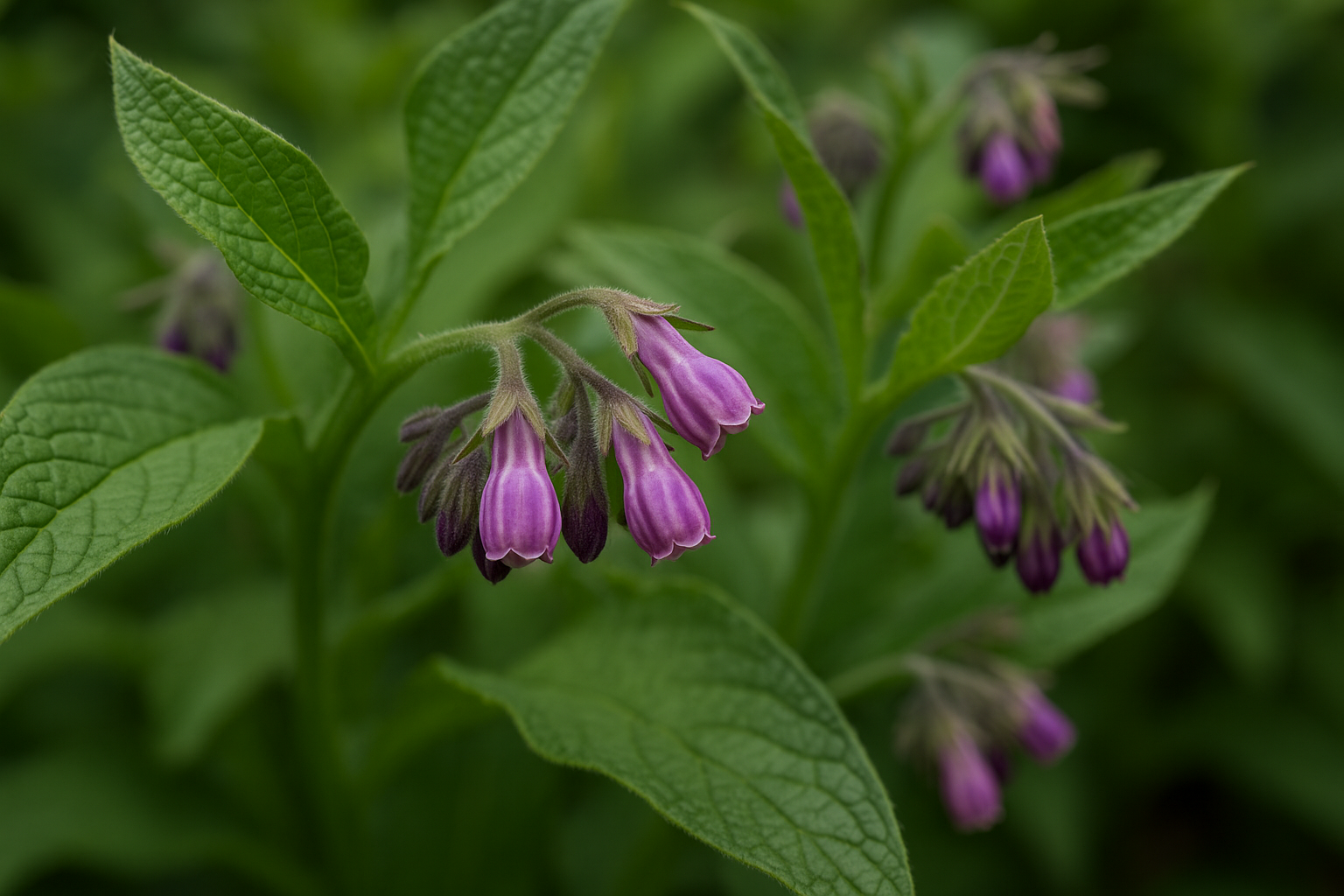
Latin / Scientific Name: Symphytum officinale
Common Names: Comfrey, Knitbone, Boneset, Healing Herb, Common Comfrey
Family: Boraginaceae
Origin & History
Comfrey is a perennial herb native to Europe and parts of Asia, later introduced to North America. It has been a staple in traditional medicine for centuries and was widely used for wound healing, bone fractures, and inflammation. Its name “Knitbone” comes from its historic reputation for helping bones mend faster. Ancient Greek and Roman physicians praised its regenerative qualities, while medieval herbalists relied on it for bruises, ulcers, and broken bones. Despite its long-standing medicinal reputation, modern research has exposed serious internal toxicity risks that have restricted its internal use in most countries.
Qualities & Traditional Use
Comfrey is rich in allantoin, a compound known for stimulating new cell growth and tissue regeneration. This made it a favored ingredient in ointments, poultices, and compresses for external healing. It also contains mucilage, tannins, and rosmarinic acid, which contribute to its soothing and anti-inflammatory properties. Traditional healers brewed Comfrey teas or made infusions for respiratory and digestive issues, unaware of the underlying risks posed by certain toxic compounds.

Your Healing Begins Here
These guides focus on real women’s health challenges such as hormonal imbalance, mental wellness, inflammation, and everyday physical discomfort.
If you’re ready to stop searching for answers and start following a clear healing plan, these guides will help you take the first step on your wellness journey.
Toxic Components & Mechanism
Comfrey contains pyrrolizidine alkaloids (PAs), the same class of compounds found in Coltsfoot, known to cause liver toxicity. When ingested, these alkaloids are metabolized into toxic intermediates that damage liver cells, leading to veno-occlusive disease, fibrosis, and in severe cases, liver failure. The danger is cumulative: even small doses consumed over time can cause irreversible damage. Topical use is considered safer but still poses risks if applied to broken skin or used excessively, as toxins can be absorbed through the skin and enter the bloodstream.
Risks, Dangers & Side Effects
The most well-documented danger of Comfrey is liver toxicity, but secondary effects can include digestive distress, nausea, and abdominal pain. Chronic internal use has been linked to hepatic failure and even death. Studies have also suggested potential carcinogenic properties associated with pyrrolizidine alkaloids. Because of these risks, the FDA and several international health agencies have banned the sale of Comfrey products intended for internal consumption.
Externally, overuse or long-term application can still result in toxin absorption, especially through damaged skin. Children, pregnant women, and individuals with compromised liver function are particularly vulnerable to its adverse effects.
Contraindications & Who Should Avoid It
Avoid use if you are:
- Pregnant or breastfeeding
- Diagnosed with liver disease or any hepatic impairment
- Under 18 years old
- Taking medications metabolized through the liver (especially acetaminophen, statins, or antifungals)
- Using other herbs containing pyrrolizidine alkaloids (such as Coltsfoot or Borage)
Internal use of Comfrey — including teas, tinctures, or capsules — should be avoided altogether.
Best Practices / Precautions
Comfrey should only be used externally and in short-term applications. Safe uses include salves or ointments for bruises, sprains, and closed wounds. It should never be applied to open or deep wounds where it can enter the bloodstream. Limit topical applications to no more than 10 consecutive days and avoid long-term or daily use. Always verify that topical products are labeled as PA-free and tested for purity. For wound healing, safer alternatives include calendula, plantain, or gotu kola.
Summary
Comfrey (Symphytum officinale) is a perfect example of how a plant can embody both extraordinary healing potential and significant danger. Revered for centuries as “Knitbone” for its regenerative effects, modern toxicology has revealed that its internal use carries serious risks. While topical, PA-free preparations may still offer safe healing benefits, internal use is no longer recommended. Comfrey stands as a reminder that wisdom in herbalism means knowing not just how to use a plant, but when not to.
References
- National Center for Complementary and Integrative Health (NCCIH): Comfrey Overview
- National Library of Medicine (PMC): Toxicological Review of Pyrrolizidine Alkaloids in Comfrey
- U.S. Food and Drug Administration (FDA): Comfrey Health Risk Advisory
- Journal of Ethnopharmacology: Pharmacology and Toxicology of Symphytum officinale
- European Medicines Agency (EMA): Public Statement on Comfrey and PA-containing Products
- Healthline: Comfrey – Benefits, Uses, and Safety Concerns
- WebMD: Comfrey – Side Effects, Interactions, and Warnings
Herbal Precautions Disclaimer- The information provided in this herbal precautions post is for educational purposes only and is not intended as medical advice. Herbal information shared through SheFit Wellness reflects traditional use, general research, and holistic education.