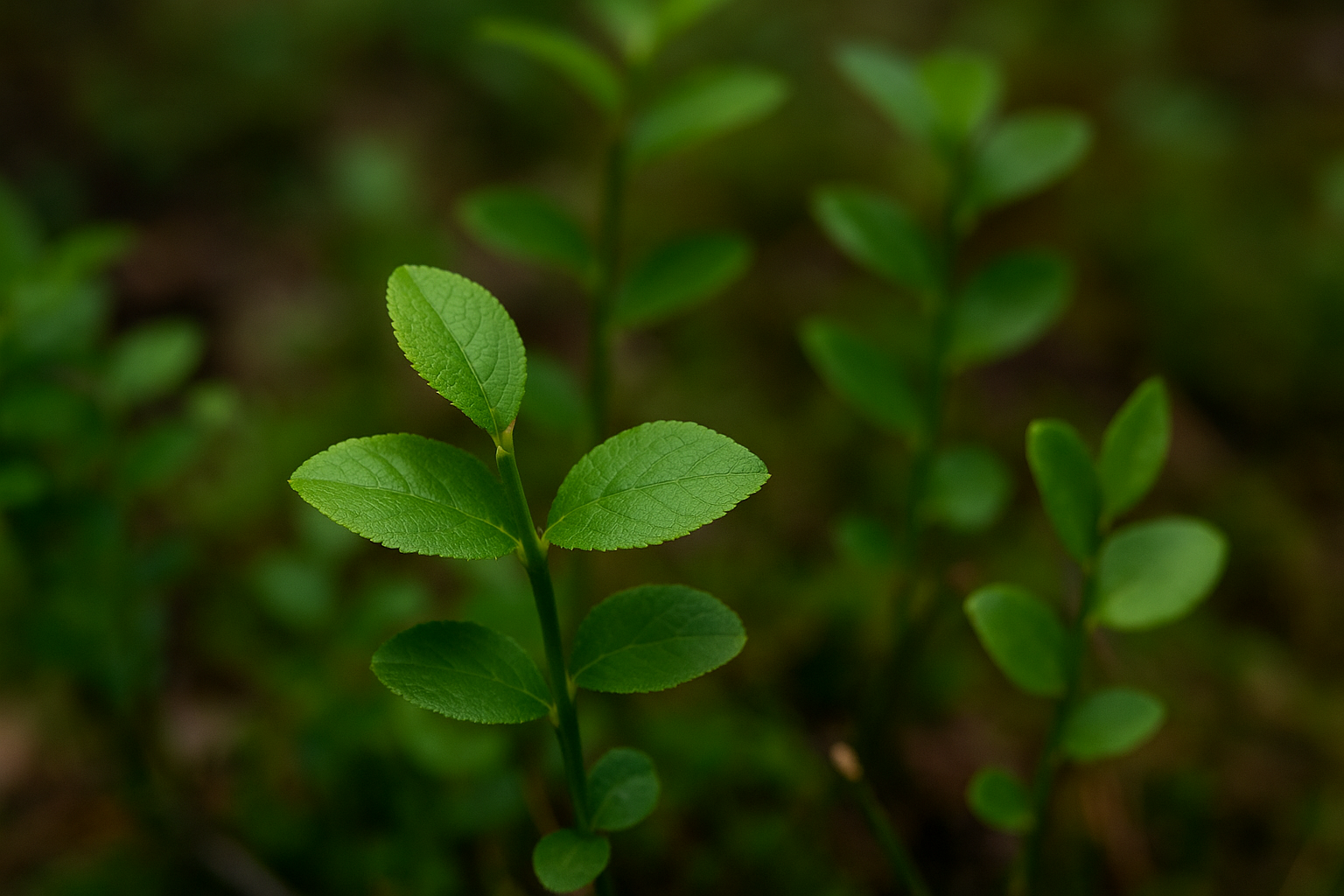
Botanical & Common Names
Latin / Scientific Name: Vaccinium myrtillus
Common Names: Bilberry, European Blueberry, Whortleberry, Huckleberry, Dyeberry
Family: Ericaceae (Heath family)
Origin & History
Bilberry is a small deciduous shrub native to Europe and parts of Northern Asia. Closely related to the American blueberry, it has been used for centuries in traditional European and folk medicine. The berries gained fame during World War II when pilots reportedly ate them to improve night vision. However, beyond the berries, the leaves of the bilberry plant have a long history of medicinal use — particularly in managing blood sugar levels and supporting circulation.
In traditional herbal medicine, bilberry leaf tea was used as a digestive tonic, urinary astringent, and blood purifier. Folk healers valued it for its ability to tone tissues, soothe inflammation, and balance internal functions. While the fruit remains popular for its antioxidants, the leaf contains stronger astringent and hypoglycemic properties, which make it both beneficial and potentially risky if misused.
Qualities & Traditional Use
Bilberry leaf is considered a cooling, drying, and astringent herb. Traditionally, it was used to tone the mucous membranes of the mouth, intestines, and urinary tract. Its high tannin content made it effective for diarrhea, sore throats, and bladder irritation. Herbalists also brewed bilberry leaf tea for blood sugar control, believing it could “purify the blood” and regulate metabolism.
In modern herbalism, bilberry leaves have been studied for their potential to lower blood glucose levels and improve capillary health, but these same actions can become dangerous when combined with medications or used long-term. While the berries are safe for daily use, the leaves require greater caution due to the concentration of bioactive compounds like hydroquinone derivatives and tannins, which can irritate the kidneys or cause toxicity if overused.
Your Healing Begins Here
These guides focus on real women’s health challenges such as hormonal imbalance, mental wellness, inflammation, and everyday physical discomfort.
If you’re ready to stop searching for answers and start following a clear healing plan, these guides will help you take the first step on your wellness journey.
Toxic Components & Mechanism
The primary compounds of concern in bilberry leaf are hydroquinone derivatives (such as arbutin) and tannins. Arbutin is converted in the body into hydroquinone, a chemical with antimicrobial properties that can disinfect the urinary tract, but it also exerts stress on the liver and kidneys when used excessively.
Prolonged use of hydroquinone-releasing herbs can lead to toxicity symptoms, including nausea, vomiting, ringing in the ears, and darkened urine. High levels of tannins can further cause digestive irritation and interfere with the absorption of nutrients and medications. The combination of these compounds makes bilberry leaf potentially harmful if taken for extended periods or in high doses.
Because of its blood-sugar-lowering properties, bilberry leaf can also potentiate hypoglycemia, especially in people taking insulin or other diabetic medications.
Risks, Dangers & Side Effects
Bilberry leaf is not recommended for prolonged or unsupervised use. Reported side effects and risks include:
- Hypoglycemia: Dangerous drops in blood sugar when combined with diabetic medications or fasting.
- Kidney and liver strain: Due to hydroquinone and tannin accumulation with long-term use.
- Digestive discomfort: Nausea, vomiting, or constipation with high-tannin exposure.
- Toxic reactions: Overuse may cause darkened urine, dizziness, or fatigue from organ stress.
- Potential interactions: Can amplify the effects of anticoagulants, diabetic drugs, or other herbs affecting blood sugar (like ginseng or cinnamon).
While bilberry berries are safe and nutrient-rich, the leaves should never be used as a daily supplement or tonic.
Contraindications & Who Should Avoid It
Avoid using Bilberry Leaf if you are:
- Pregnant or breastfeeding
- Diagnosed with diabetes and using insulin or oral hypoglycemic drugs
- Suffering from liver or kidney disease
- Taking blood-thinning medications
- Undergoing surgery or prone to low blood sugar
- Planning long-term use of herbal teas or tinctures containing bilberry leaf
Children should not use bilberry leaf preparations due to the risk of blood sugar instability and toxicity.
Best Practices / Precautions
If using bilberry leaf therapeutically, do so only under the guidance of a qualified herbalist or healthcare provider.
- Restrict use to short-term courses (no more than 5–7 days).
- Avoid combining with other herbs or medications that affect blood sugar.
- Choose high-quality, organically grown herbs to prevent contamination.
- Do not use the essential oil or concentrated extracts internally.
- For ongoing support of blood sugar and circulation, use bilberry fruit (the berries) instead — they are safer, nutrient-rich, and free from toxic hydroquinone derivatives.
Safer alternatives for similar effects include Cinnamon, Gymnema sylvestre, or Mulberry leaf, which help balance glucose naturally without damaging the liver or kidneys.
Summary
Vaccinium myrtillus leaf has a long history as a powerful herbal remedy for digestion, urinary health, and blood sugar balance — but its potency demands caution. While the berries nourish, the leaves cleanse; and cleansing, when excessive, can become harm.
Bilberry leaf’s high tannin and hydroquinone content make it too strong for casual or long-term use. Prolonged consumption can strain the liver and kidneys, lower blood sugar dangerously, and cause toxic buildup. As a result, most modern herbalists prefer the fruit over the leaf for safe, everyday health support.
The lesson of bilberry leaf is clear: even nature’s gentlest remedies can turn harmful when misunderstood or misused. Respect the plant, follow tradition with knowledge, and use it wisely — never excessively.
References
- National Center for Complementary and Integrative Health (NCCIH): Bilberry Overview
- European Medicines Agency: Community Herbal Monograph on Vaccinium myrtillus Leaf
- National Library of Medicine (PMC): Toxicological Evaluation of Hydroquinone Derivatives in Herbal Medicine
- Journal of Ethnopharmacology: Comparative Phytochemical Study of Bilberry Fruit and Leaf
- WebMD: Bilberry – Uses, Side Effects, and Interactions
- Mount Sinai Health Library: Bilberry Leaf Cautions and Warnings
- Healthline: Bilberry Leaf vs. Berry – Safety and Efficacy
Herbal Precautions Disclaimer- The information provided in this herbal precautions post is for educational purposes only and is not intended as medical advice. Herbal information shared through SheFit Wellness reflects traditional use, general research, and holistic education.