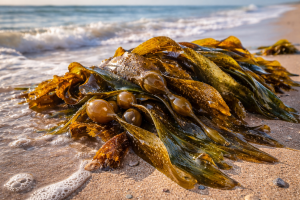
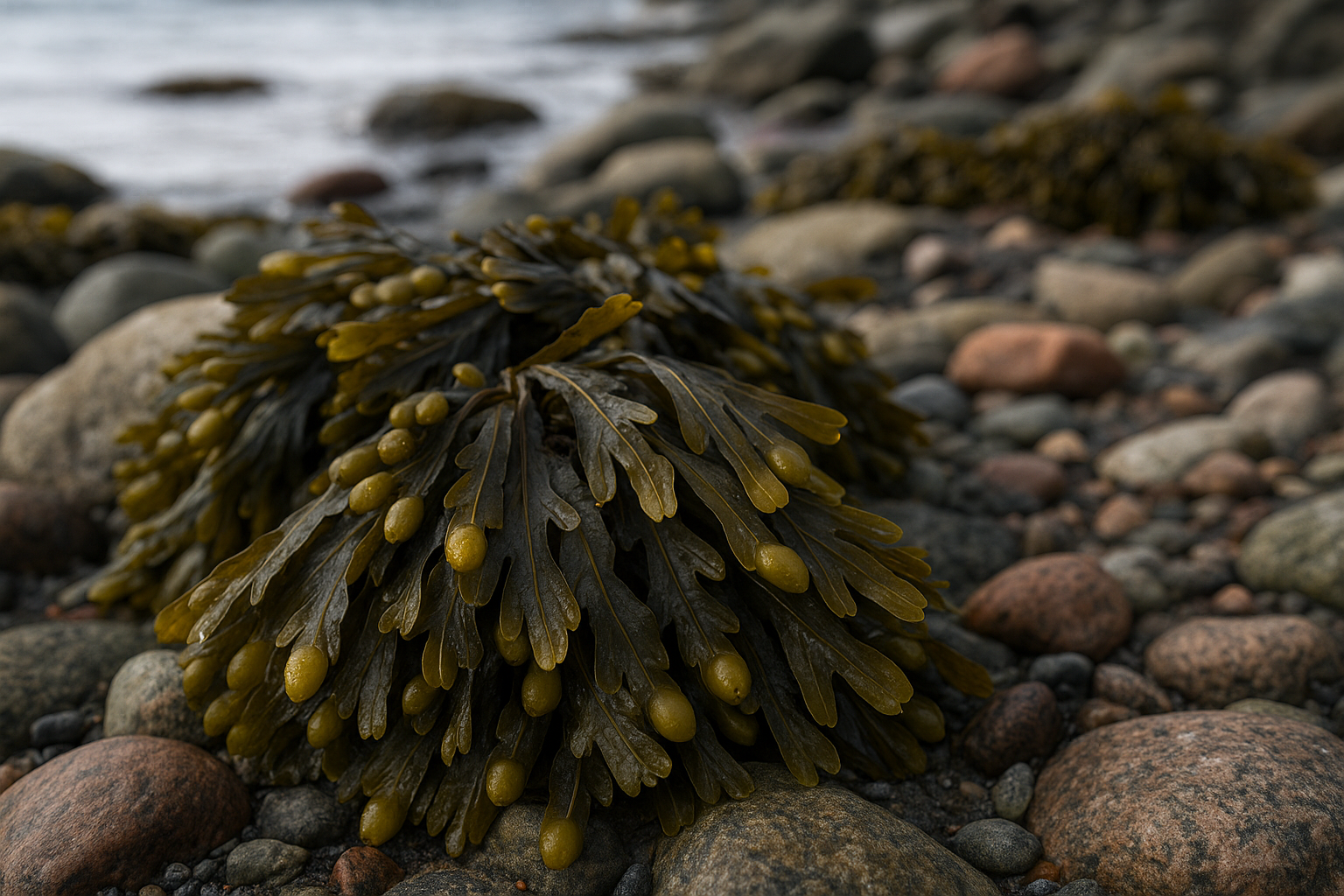
Latin / Scientific Name: Fucus vesiculosus
Common Names: Bladderwrack, Sea Kelp, Rockweed, Black Tang, Seawrack, Cutweed, Sea Spirit
Family: Fucaceae (Brown Algae Family)
Origin & History
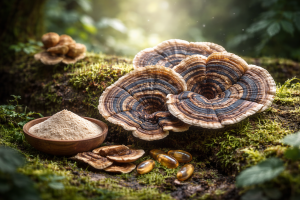
Bladderwrack is a type of brown seaweed found along the North Atlantic and Baltic Sea coasts. It was one of the first natural sources of iodine identified in the early 19th century and was historically used to treat goiter and thyroid-related conditions. In traditional European and coastal herbal medicine, Bladderwrack was consumed as a mineral-rich tonic for energy, metabolism, and joint health.
Qualities & Traditional Use
Bladderwrack is known for its high iodine, calcium, magnesium, potassium, and trace mineral content. Traditionally, it has been used to. Traditionally, it has been used to support thyroid function and hormone regulation, boost metabolism and energy, aid in detoxification, strengthen bones and connective tissue, and promote healthy skin, hair, and nails.

Your Healing Begins Here
These guides focus on real women’s health challenges such as hormonal imbalance, mental wellness, inflammation, and everyday physical discomfort.
If you’re ready to stop searching for answers and start following a clear healing plan, these guides will help you take the first step on your wellness journey.
Toxic Components & Mechanism
The primary active components are iodine compounds, fucoidan, and alginate. While iodine supports thyroid hormone production, excess intake can disrupt thyroid function, causing either hyperthyroidism or hypothyroidism. Some Bladderwrack may accumulate heavy metals (arsenic, lead, mercury) depending on water quality. Overconsumption can stress the endocrine system or alter thyroid hormone output.
Risks, Dangers & Side Effects
- Excess iodine intake may cause thyroid imbalance or enlargement (goiter)
- Heavy metal contamination can lead to long-term toxicity if sourced from polluted waters
- Overuse can trigger irritability, rapid heartbeat, or restlessness
- May cause stomach upset or nausea in sensitive individuals
- Can increase bleeding risk when combined with anticoagulants
Contraindications & Who Should Avoid It
- Individuals with thyroid disorders (hyperthyroidism or autoimmune thyroiditis) without practitioner supervision
- Those taking thyroid medications or hormone therapy
- People on blood-thinning or antiplatelet medications
- Individuals with iodine sensitivity or seafood allergies
- Pregnant or breastfeeding women unless prescribed by a qualified practitioner
Avoid use if you are:
- Managing active thyroid disease without medical supervision
- Using medications that affect blood clotting or thyroid hormones
- Allergic to iodine, shellfish, or seaweed-based products
- Diagnosed with heart arrhythmias or hypertension due to iodine sensitivity
Best Practices / Precautions
- Use only Bladderwrack harvested from clean, unpolluted waters to reduce heavy metal exposure.
- Limit intake to small, supplemental doses (as a tincture, capsule, or tea) and avoid daily long-term use.
- Monitor thyroid function regularly if used for extended periods.
- Combine with nourishing herbs like nettle or alfalfa to balance its mineral potency.
- Avoid combining with synthetic thyroid medications unless supervised by a professional.
- Store in a cool, dry place to preserve iodine content and prevent rancidity.
Summary
Bladderwrack is a nutrient-dense seaweed celebrated for its ability to nourish the thyroid, support metabolism, and fortify the body with essential minerals. However, its high iodine content and potential for heavy metal contamination make cautious use essential. In the SheFit Wellness approach, Bladderwrack is regarded as a mineral restorative, not a daily supplement , a supportive herb best used periodically for nourishment and hormonal balance under mindful guidance.
References
- Healthline – Bladderwrack: Uses, Benefits, and Side Effects
- RxList – Bladderwrack: Overview, Uses, Side Effects, Precautions
- WebMD – Bladderwrack: Health Benefits and Warnings
- NCBI – Pharmacological Activities and Therapeutic Applications of Fucoidan from Brown Algae
Herbal Precautions Disclaimer- The information provided in this herbal precautions post is for educational purposes only and is not intended as medical advice. Herbal information shared through SheFit Wellness reflects traditional use, general research, and holistic education.