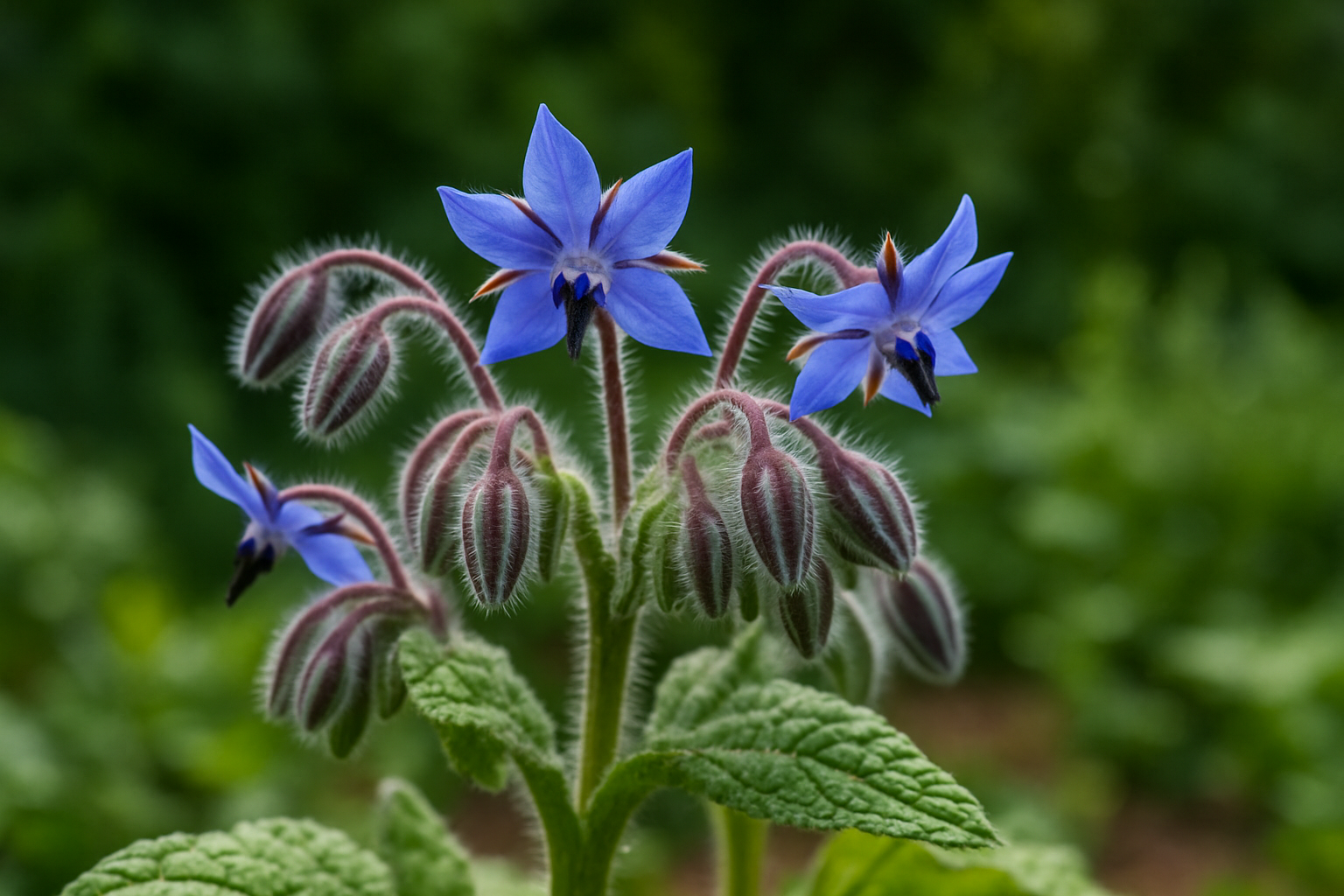
Latin / Scientific Name: Borago officinalis
Common Names: Borage, Starflower, Bee Bush, Bee Bread, Burrage, Cool Tankard, Bugloss
Family: Boraginaceae (Borage Family)
Origin & History
Borage is native to the Mediterranean region and has been cultivated for centuries across Europe and North Africa. Historically, it was known as the “herb of courage,” used by ancient Greeks and Romans to lift the spirit and calm fear. In traditional herbalism, borage leaves and flowers were used to support the adrenal glands, ease inflammation, and encourage vitality after illness or stress.
Qualities & Traditional Use
Borage is considered a cooling, moistening herb that restores balance to overheated or inflamed conditions in the body. Traditionally, it has been used to restore adrenal strength after periods of exhaustion, support the skin and respiratory system, regulate hormonal balance, and soothe nervous tension. Its seeds are a rich source of gamma-linolenic acid (GLA), which supports hormonal and inflammatory balance, making it popular for conditions like PMS, eczema, and arthritis.

Your Healing Begins Here
These guides focus on real women’s health challenges such as hormonal imbalance, mental wellness, inflammation, and everyday physical discomfort.
If you’re ready to stop searching for answers and start following a clear healing plan, these guides will help you take the first step on your wellness journey.
Toxic Components & Mechanism
The leaves and flowers of borage contain pyrrolizidine alkaloids (PAs), compounds that can be toxic to the liver when consumed in large or frequent amounts. These alkaloids can lead to hepatic stress or damage if metabolized over time. Borage seed oil, although widely used for its GLA content, may still contain trace amounts of these alkaloids unless properly purified. Additionally, its mild anticoagulant and sedative properties can interact with certain medications.
Risks, Dangers & Side Effects
- Potential liver toxicity from long-term or high-dose use due to pyrrolizidine alkaloids
- Increased bleeding risk when taken with anticoagulant or antiplatelet medications
- Possible drop in seizure threshold when combined with certain drugs
- Stomach upset, nausea, or loose stool from high oil doses
- Unsafe during pregnancy and breastfeeding due to uterine-stimulating effects
Contraindications & Who Should Avoid It
- Individuals with liver disease or compromised liver function
- Those taking anticoagulants, sedatives, or seizure medications
- People with bleeding disorders or preparing for surgery
- Pregnant or breastfeeding women
- Children under 12 years of age without professional guidance
Avoid use if you are:
- Managing active liver disease or using hepatically metabolized medications
- Taking medications that increase bleeding risk
- Pregnant, breastfeeding, or planning pregnancy
- Prone to seizures or using sedative drugs concurrently
Best Practices / Precautions
Use only certified PA-free borage products to ensure safety. Limit internal use to short-term periods and avoid combining with other liver-metabolized herbs or supplements. If using borage seed oil, follow dosage instructions carefully and purchase from reputable brands that verify purity. Store oil in a cool, dark place to prevent rancidity. External use of borage oil for skin conditions is generally safe when applied in moderation.
Summary
Borage is a soothing, restorative herb known for its ability to cool inflammation, uplift mood, and support hormonal balance. However, due to its potential liver toxicity and interaction risks, it should be used with mindfulness and proper sourcing. In the SheFit Wellness approach, borage is viewed as a supportive ally for balance and recovery—most beneficial when used temporarily, in clean, verified form, and always paired with nourishment and rest.
References
- Healthline – Borage Oil: Benefits, Uses, and Side Effects
- RxList – Borage: Overview, Uses, Side Effects, Precautions
- WebMD – Borage: Health Benefits and Warnings
- NCBI – Borage (Borago officinalis L.): Pharmacological and Toxicological Overview
- ScienceDirect – Pyrrolizidine Alkaloids in Borage: Safety Evaluation and Risk Assessment
Herbal Precautions Disclaimer- The information provided in this herbal precautions post is for educational purposes only and is not intended as medical advice. Herbal information shared through SheFit Wellness reflects traditional use, general research, and holistic education.