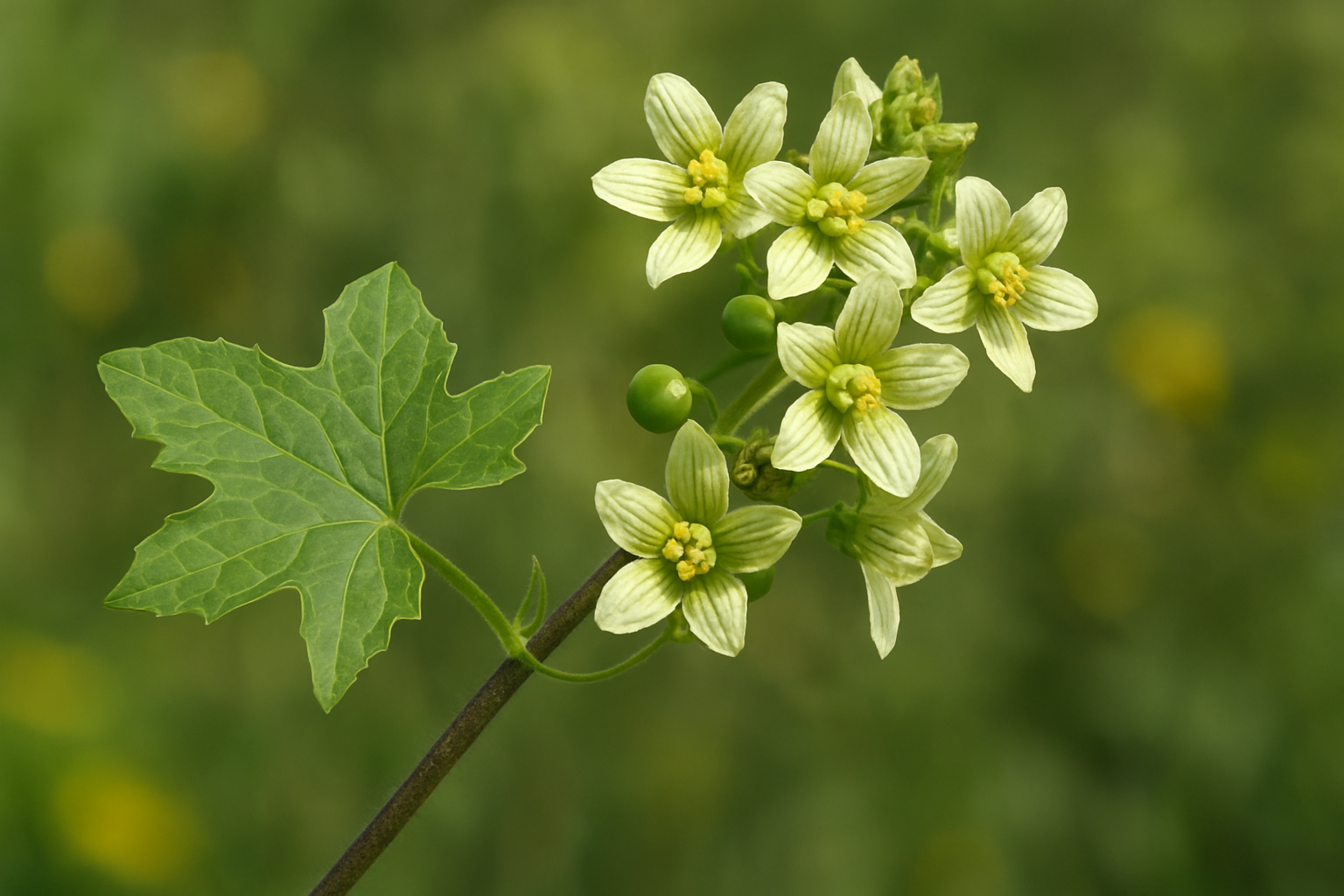
Latin / Scientific Name: Bryonia alba (White Bryony), Bryonia dioica (Red Bryony)
Common Names: White Bryony, Wild Hops, English Mandrake
Family: Cucurbitaceae (Gourd Family)
Origin & History
Bryonia is a climbing perennial native to Europe and Western Asia, long regarded as a potent but dangerous medicinal vine. In early European herbalism, it was used for respiratory congestion, swelling, and painful conditions where strong purgatives were culturally accepted. Over time, as safer herbs emerged, Bryonia’s internal use declined sharply due to its toxicity. Today, it appears primarily in homeopathic practice, where extreme dilutions minimize its harsh effects.
Qualities & Traditional Use
Traditionally, Bryonia was valued for its strong drying, stimulating, and purging qualities. It was considered helpful for deep-seated congestion, stubborn inflammation, and sluggish elimination. However, due to the intensity of its compounds, it was always used sparingly. Modern holistic herbalism generally avoids Bryonia internally because many safer, gentler alternatives can achieve similar results without the risk.

Your Healing Begins Here
These guides focus on real women’s health challenges such as hormonal imbalance, mental wellness, inflammation, and everyday physical discomfort.
If you’re ready to stop searching for answers and start following a clear healing plan, these guides will help you take the first step on your wellness journey.
Toxic Components & Mechanism
Bryonia contains cucurbitacins, powerful, bitter resinous compounds that aggressively irritate the gastrointestinal tract. These chemicals can cause violent purging, inflammation, and systemic distress. When taken internally in anything beyond micro-doses, Bryonia can affect the cardiovascular, respiratory, and renal systems, making it one of the more hazardous herbs in traditional Western herbal medicine.
Risks, Dangers & Side Effects
Because Bryonia is a highly potent herb with a narrow margin of safety, it carries a significant risk of adverse effects. The following reactions may occur even with small amounts:
- Severe nausea or vomiting
- Intense abdominal cramping
- Diarrhea or dehydration
- Throat or stomach irritation
- Dizziness or faintness
- Respiratory discomfort
- Cardiovascular strain
- Potential kidney irritation
Contraindications & Who Should Avoid It
Individuals with certain health conditions or vulnerabilities should avoid Bryonia completely. This herb is not appropriate for those with heightened sensitivity, compromised immunity, or weakened organs. Avoid Bryonia if you are:
- Pregnant
- Breastfeeding
- Managing kidney disorders
- Living with heart conditions
- Experiencing gastrointestinal inflammation
- Prone to dehydration
- Elderly or a child
Avoid Use If You Are:
Because of its purgative nature and strong physiological effects, Bryonia should not be used in combination with other destabilizing substances or during periods of bodily weakness. Avoid Bryonia if you are:
- Taking diuretics
- Vulnerable to electrolyte imbalances
- Experiencing acute digestive distress
- Using other strong laxatives
- Unable to maintain adequate hydration
- Sensitive to cucurbitacin-containing plants
Best Practices / Precautions
Due to its toxicity, Bryonia requires extreme caution and should never be used casually or without professional supervision. If Bryonia is considered in any form, adhere to the following precautions:
- Avoid internal use unless guided by a trained practitioner
- Do not exceed micro-doses or homeopathic dilutions
- Monitor closely for gastrointestinal irritation
- Discontinue immediately if burning, nausea, or abdominal pain occurs
- Opt for safer alternative herbs when possible
- Keep the herb away from children and pets
Summary
Bryonia is a historically respected, but highly dangerous, herb whose internal use offers more risk than benefit in modern holistic practice. While it once served as a powerful purgative and anti-inflammatory remedy, its toxic properties make it unsuitable for most wellness applications today. In the SheFit Wellness philosophy, Bryonia is not recommended as a primary herb due to its potential to aggravate vulnerable systems, especially in individuals managing viral activity, thyroid imbalance, or gut inflammation.
References
- From Medicinal Plant to Noxious Weed: Bryonia alba L.
- Flavonoid Analysis and Antioxidant:Activities of Bryonia alba L
Herbal Precautions Disclaimer- The information provided in this herbal precautions post is for educational purposes only and is not intended as medical advice. Herbal information shared through SheFit Wellness reflects traditional use, general research, and holistic education.