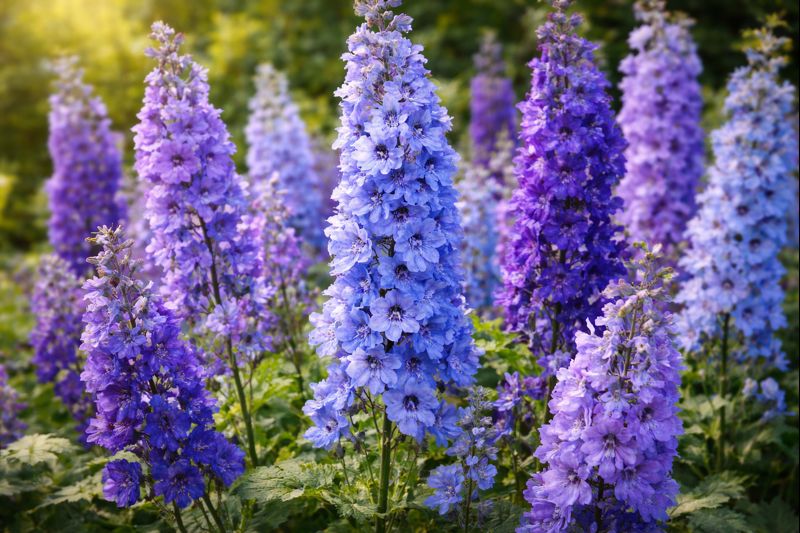
Latin / Scientific Name: Delphinium spp. (commonly Delphinium consolida, Delphinium elatum)
Common Names: Delphinium, Larkspur, Rocket Larkspur
Family: Ranunculaceae (Buttercup family)
Origin & History
Delphinium is a flowering plant native to Europe, Asia, and parts of North America. It has long been cultivated for ornamental purposes due to its tall spikes of vivid blue, purple, pink, or white flowers. Despite its beauty, delphinium has a long history of being recognized as poisonous to humans and animals.
Historically, delphinium was used externally and agriculturally rather than internally. In ancient and medieval times, it was applied as an insecticide, lice treatment, and parasite deterrent. Some traditional systems experimented with delphinium in extremely small doses for pain or spasms, but such uses were controversial even in historical texts due to frequent poisoning incidents.
Modern herbalism largely excludes delphinium from internal use because of its high toxicity and unpredictable effects.
Qualities & Traditional Use
Delphinium is considered:
• Extremely toxic
• Cooling
• Bitter
• Nervine (toxic action)
• Antiparasitic (historical, external use)
Historically, delphinium was used to:
• Kill lice and parasites (external use)
• Repel insects
• Poison pests and predators
• Occasionally sedate or paralyze (dangerous historical use)
It was never regarded as a nourishing or supportive herb and was treated as a dangerous plant requiring strict handling.
Your Healing Begins Here
These guides focus on real women’s health challenges such as hormonal imbalance, mental wellness, inflammation, and everyday physical discomfort.
If you’re ready to stop searching for answers and start following a clear healing plan, these guides will help you take the first step on your wellness journey.
Toxic Components & Mechanism
Delphinium contains several potent and dangerous alkaloids, including:
• Diterpenoid alkaloids (delphinine, ajacine)
• Neurotoxic compounds
These alkaloids interfere with the nervous system by disrupting neuromuscular transmission. They can cause paralysis by blocking nerve impulses that control muscle movement, including those required for breathing and heart function.
The toxic mechanism is rapid and dose-sensitive. Even small amounts can cause severe reactions, and there is no safe internal dosage recognized in modern herbal practice.
Risks, Dangers & Side Effects
Delphinium is dangerous and potentially fatal if ingested.
Reported risks include:
• Severe nausea and vomiting
• Muscle weakness or paralysis
• Respiratory distress
• Cardiac irregularities
• Seizures
• Loss of consciousness
• Death
Poisoning can occur through ingestion or, in rare cases, prolonged skin exposure to plant sap in sensitive individuals.
Contraindications & Who Should Avoid It
Delphinium should be avoided entirely for internal use.
It is contraindicated for individuals with:
• Any chronic illness
• Neurological conditions
• Cardiovascular disease
• Respiratory conditions
• Compromised immune systems
Delphinium should not be handled casually, especially around children or pets.
Avoid Use If You Are:
• Pregnant or trying to conceive
• Breastfeeding
• Elderly or medically fragile
• Taking medications that affect the nervous system or heart
• Untrained in botanical toxicology
There is no circumstance in which delphinium should be self-administered internally.
Best Practices / Precautions
From a modern herbal safety perspective:
• Do not ingest delphinium in any form
• Do not prepare teas, tinctures, or powders
• Use gloves when handling large quantities
• Keep away from children and animals
• Study only in an educational or botanical context
At SheFit Wellness, delphinium is acknowledged as toxic flora, not a therapeutic herb.
Summary
Delphinium is a striking example of how beauty in nature does not equate to safety. While historically used in limited external and agricultural applications, its potent neurotoxic alkaloids make it unsuitable for internal or casual medicinal use. The risks associated with delphinium far outweigh any historical or theoretical benefit.
At SheFit Wellness, delphinium is included for education, awareness, and harm prevention. Understanding dangerous plants is just as important as learning about supportive herbs, and responsible herbalism begins with knowing what to avoid.
References
- World Health Organization – Monographs on Medicinal Plants
- Botanical Safety Handbook – American Herbal Products Association
- European Medicines Agency (EMA) – Toxic plant safety data
- Mills, S. & Bone, K. Principles and Practice of Phytotherapy
- National Center for Biotechnology Information (NCBI)
Herbal Precautions Disclaimer- The information provided in this herbal precautions post is for educational purposes only and is not intended as medical advice. Herbal information shared through SheFit Wellness reflects traditional use, general research, and holistic education.