Botanical & Common Names
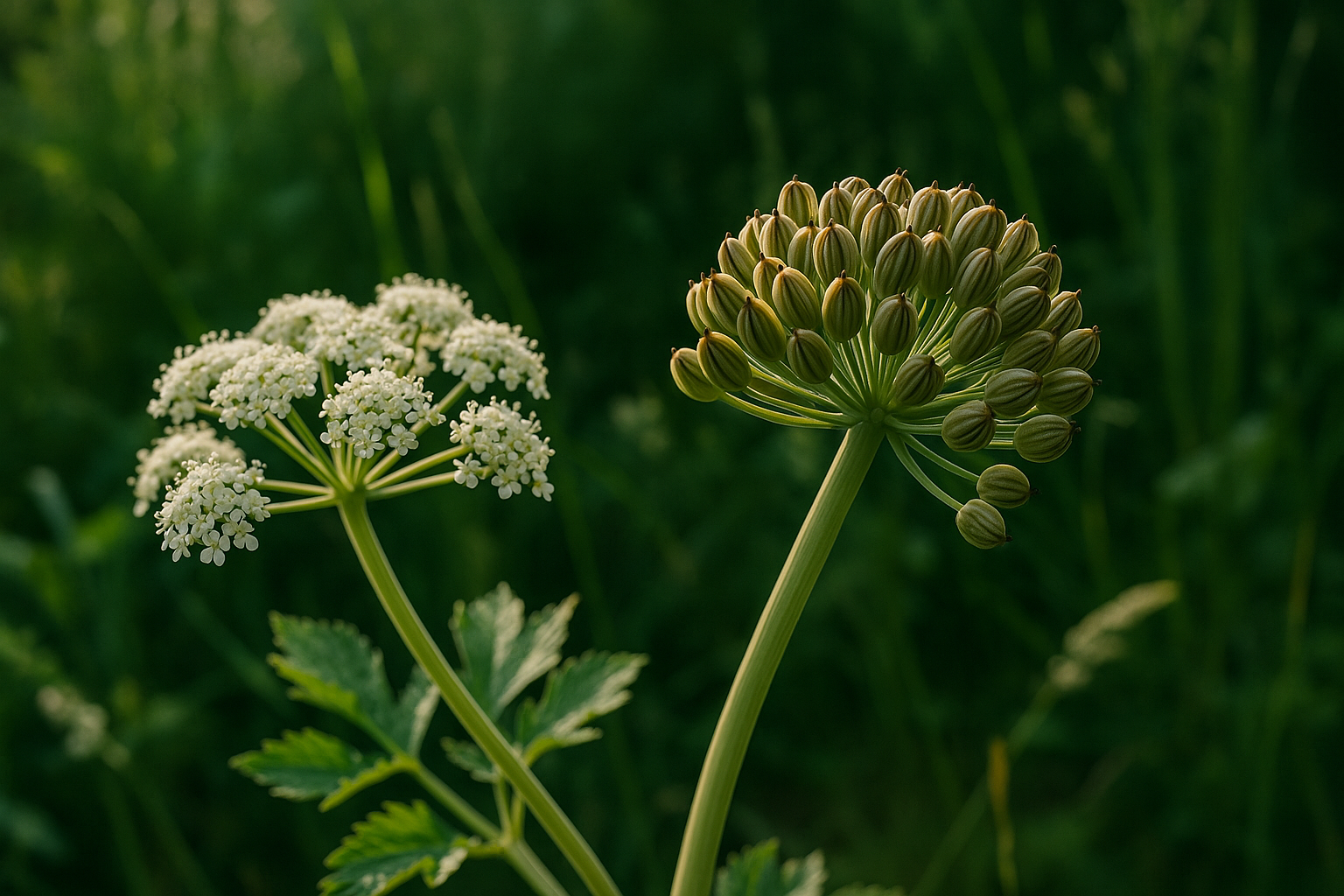
Latin / Scientific Name: Angelica archangelica
Common Names: Garden Angelica, Wild Celery, Archangel, Norwegian Angelica, Holy Ghost Root
Family: Apiaceae (Parsley family)
Origin & History
Angelica is a biennial herb native to Northern Europe, particularly Iceland, Norway, and parts of Russia. It has long been regarded as a sacred plant , its name, archangelica, comes from the legend that the Archangel Michael revealed its healing powers to humanity during the plague. Historically, Angelica was used to protect against disease, ward off evil spirits, and strengthen the body’s resistance to infection. In traditional European herbalism, the seeds and roots were valued as digestive and circulatory tonics. The herb was later introduced into monastic and folk medicine, where it was used to flavor liqueurs, purify the blood, and support women’s reproductive health.
Qualities & Traditional Use
Angelica is considered a warming, stimulating, and aromatic herb with strong digestive, circulatory, and respiratory actions. In traditional use, the root and seeds were used to relieve gas, bloating, sluggish digestion, and poor appetite. Herbalists viewed it as a tonic for people who felt cold, weak, or fatigued, particularly after illness.
In European folk medicine, Angelica seed was used to strengthen the lungs and clear mucus from the respiratory tract. The herb was also prescribed to stimulate menstrual flow, ease cramps, and balance irregular cycles. In Traditional Chinese Medicine, related Angelica species (such as Angelica sinensis, or Dong Quai) are known for nourishing blood, improving circulation, and supporting hormonal balance.
Energetically, Angelica promotes movement and warmth throughout the body. It’s believed to restore vitality and renew the spirit, making it a favorite in winter tonics,women’s herbal formulas, and digestive bitters.
Your Healing Begins Here
These guides focus on real women’s health challenges such as hormonal imbalance, mental wellness, inflammation, and everyday physical discomfort.
If you’re ready to stop searching for answers and start following a clear healing plan, these guides will help you take the first step on your wellness journey.
Toxic Components & Mechanism
While generally regarded as safe in moderate doses, Angelica contains several compounds that can cause adverse effects in large amounts or under certain conditions. The main active constituents include furocoumarins, volatile oils (α-pinene, limonene, and β-phellandrene), and angelic acid derivatives.
Furocoumarins are photosensitizing compounds that make the skin more sensitive to sunlight and ultraviolet radiation. Excess exposure after ingestion or topical use can cause redness, blistering, or rash. The volatile oils in Angelica can overstimulate the digestive and nervous systems if consumed in concentrated forms.
When used improperly or combined with other stimulating herbs, Angelica may increase the risk of light sensitivity, blood thinning, or uterine contractions in sensitive individuals.
Risks, Dangers & Side Effects
Angelica is not suitable for everyone and must be used with awareness. Reported side effects include:
- Photosensitivity: Increased risk of sunburn or rash after exposure to sunlight or tanning lamps.
- Digestive upset: Nausea or diarrhea when taken in high doses or as a concentrated essential oil.
- Blood thinning: Because Angelica contains coumarin-like compounds, it can enhance the effects of anticoagulant medications.
- Uterine stimulation: In large doses, it may cause uterine contractions, posing a risk during pregnancy.
Although mild for most, these effects can become serious if the herb is used excessively, combined with pharmaceuticals, or consumed without professional guidance.
Contraindications & Who Should Avoid It
Avoid using Angelica Seed or Herb if you are:
- Pregnant or breastfeeding
- Taking blood-thinning medications (such as warfarin, aspirin, or clopidogrel)
- Using antiplatelet drugs or herbal anticoagulants (like garlic, ginkgo, or ginger)
- Sensitive to sunlight or currently using photosensitizing medications (such as tetracyclines or retinoids)
- Suffering from stomach ulcers, reflux, or chronic digestive inflammation
- Diagnosed with bleeding disorders or scheduled for surgery
Because Angelica can stimulate uterine contractions, it should never be used during pregnancy unless under medical supervision.
Best Practices / Precautions
When used properly, Angelica can be a valuable herbal ally — but the form, dose, and source matter greatly.
- Use dried root or seed infusions rather than essential oils for internal use.
- Avoid excessive or long-term use; most herbalists recommend short therapeutic courses (7–10 days).
- Always store it away from direct light to preserve its volatile compounds.
- Avoid topical use before going into sunlight, as even small amounts of oil can cause skin reactions.
- Choose certified organic or wildcrafted sources to ensure purity and prevent contamination with similar toxic Apiaceae species.
For digestive or respiratory support, consider gentler alternatives such as fennel, chamomile, or lemon balm for ongoing daily use.
Summary
Angelica archangelica has been cherished for centuries as a protective and restorative herb — one that bridges medicine, myth, and spirit. Traditionally used to strengthen digestion, improve circulation, and support women’s health, it remains a respected herb among European and holistic practitioners. However, its potent chemistry requires caution. Overuse or improper handling can cause light sensitivity, digestive upset, or complications for those on blood-thinning medications.
As with many powerful herbs, the difference between remedy and risk lies in respect and restraint. Angelica is best used thoughtfully, under guidance, and always in balance with the body’s natural rhythms.
References
- National Center for Complementary and Integrative Health (NCCIH): Angelica archangelica Overview
- European Medicines Agency: Herbal Monograph on Angelica Root and Seed
- Mount Sinai Health Library: Angelica – Uses and Cautions
- WebMD: Angelica Herb – Side Effects and Interactions
- American Botanical Council: Angelica archangelica Monograph
- Healthline: Angelica Herb – Benefits and Safety
- Journal of Ethnopharmacology: Phytochemistry and Traditional Uses of Angelica Species
Herbal Precautions Disclaimer- The information provided in this herbal precautions post is for educational purposes only and is not intended as medical advice. Herbal information shared through SheFit Wellness reflects traditional use, general research, and holistic education.