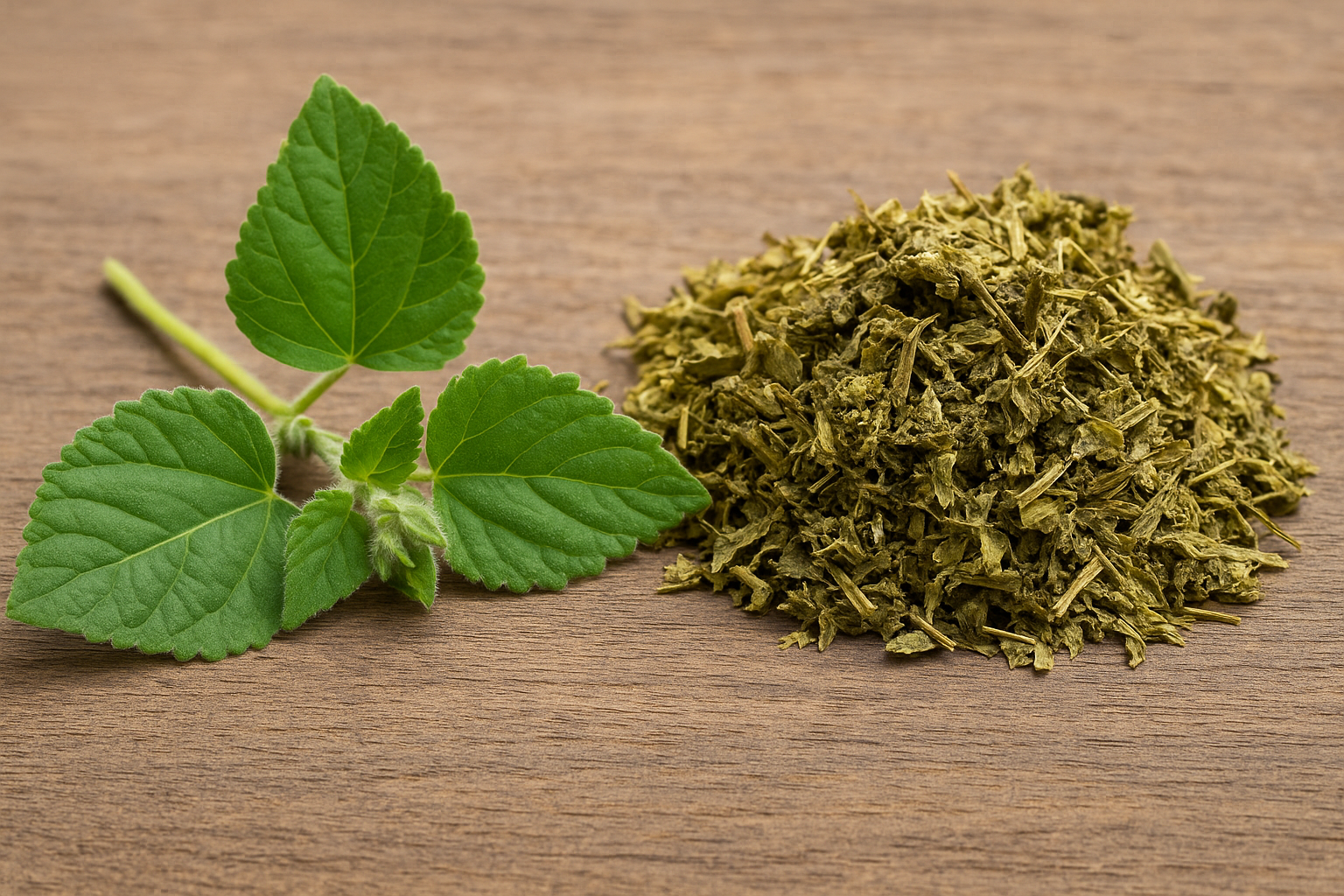
Botanical & Common Names
Latin / Scientific Name: Sida cordifolia
Common Names: Country Mallow, Bala, Heart-leaf Sida, Indian Mallow, Flannel Weed
Family: Malvaceae
Origin & History
Country Mallow is a perennial shrub native to India and widely distributed throughout tropical and subtropical regions. In Ayurvedic medicine, it is known as Bala, meaning “strength,” and has been used for centuries as a rejuvenating and restorative herb. Traditional healers valued it for its energizing effects, particularly in improving vitality, muscle tone, and sexual function. Outside of India, Country Mallow became controversial in the 1990s after it was discovered to contain ephedrine-like alkaloids, leading to its inclusion in weight-loss and energy supplements. This misuse sparked widespread safety concerns due to its potential cardiovascular risks.
Qualities & Traditional Use
In traditional Ayurvedic practice, Country Mallow was used to strengthen the nervous system, improve stamina, and support respiratory health. It was often prescribed for asthma, arthritis, and muscle weakness. Its roots and leaves contain compounds with anti-inflammatory, analgesic, and mild stimulant effects. Modern analysis revealed that the plant naturally contains ephedrine and pseudoephedrine, stimulants similar to those found in the now-banned herb Ephedra sinica. While this explains its energizing effects, it also makes unsupervised or high-dose use extremely dangerous.
Your Healing Begins Here
These guides focus on real women’s health challenges such as hormonal imbalance, mental wellness, inflammation, and everyday physical discomfort.
If you’re ready to stop searching for answers and start following a clear healing plan, these guides will help you take the first step on your wellness journey.
Toxic Components & Mechanism
The primary toxic components in Country Mallow are ephedrine and pseudoephedrine alkaloids. These compounds act as sympathomimetic stimulants, activating the body’s “fight-or-flight” response. They increase heart rate, constrict blood vessels, and raise blood pressure. In small therapeutic doses, these compounds may temporarily enhance alertness or open airways; however, in larger doses, they over-stimulate the cardiovascular and nervous systems. This can lead to serious complications such as heart attack, stroke, seizure, or cardiac arrest.
Risks, Dangers & Side Effects
Country Mallow is considered unsafe for internal use due to its potent stimulant properties. Reported side effects include rapid heartbeat, hypertension, insomnia, anxiety, tremors, and chest pain. Severe cases have resulted in heart palpitations, seizures, stroke, and death, particularly when combined with caffeine or other stimulants.
Because its alkaloid concentration varies depending on plant maturity and preparation, even natural extracts can cause unpredictable reactions. The U.S. Food and Drug Administration (FDA) banned the sale of dietary supplements containing Sida cordifolia after several reports of adverse cardiovascular events.
Contraindications & Who Should Avoid It
Avoid use if you are:
- Pregnant or breastfeeding
- Diagnosed with heart disease, hypertension, or arrhythmia
- Living with anxiety, hyperthyroidism, or diabetes
- Taking antidepressants, stimulants, or decongestants
- Sensitive to caffeine or other nervous system stimulants
- Under 18 years old
Country Mallow should never be combined with caffeine, guarana, green tea extract, or pre-workout supplements, as these combinations can dangerously elevate heart rate and blood pressure.
Best Practices / Precautions
Due to its unpredictable potency and stimulant nature, internal use of Country Mallow is strongly discouraged. While some traditional Ayurvedic preparations use the root in highly diluted decoctions, these should only be administered under professional supervision. The herb should not be used in capsule, powder, or concentrated extract form. For safe alternatives, consider ashwagandha, rhodiola, or ginseng, which offer similar energy-boosting effects without severe cardiovascular risk.
Summary
Country Mallow (Sida cordifolia) is a classic example of an herb whose ancient wisdom has been overshadowed by modern misuse. Once used sparingly in Ayurveda to promote strength and resilience, it became dangerous when rebranded as a stimulant for weight loss and energy. Containing natural ephedrine-like compounds, Country Mallow poses serious risks to the heart and nervous system. Its story is a reminder that herbal medicine requires balance — respect for tradition, understanding of chemistry, and awareness of the fine line between medicine and harm.
References
- National Center for Complementary and Integrative Health (NCCIH): Sida cordifolia Overview
- National Library of Medicine (PMC): Due to its unpredictable potency and stimulant nature, internal use of Country Mallow is strongly discouraged
- Journal of Ethnopharmacology: Phytochemical and Pharmacological Review of Sida cordifolia
- U.S. Food and Drug Administration (FDA): Ban on Dietary Supplements Containing Ephedrine Alkaloids
- WebMD: Country Mallow – Uses, Side Effects, and Safety
- Mount Sinai Health Library: Sida cordifolia – Cautions and Risks
- Healthline: Country Mallow and Ephedrine: Understanding the Dangers
Herbal Precautions Disclaimer- The information provided in this herbal precautions post is for educational purposes only and is not intended as medical advice. Herbal information shared through SheFit Wellness reflects traditional use, general research, and holistic education.