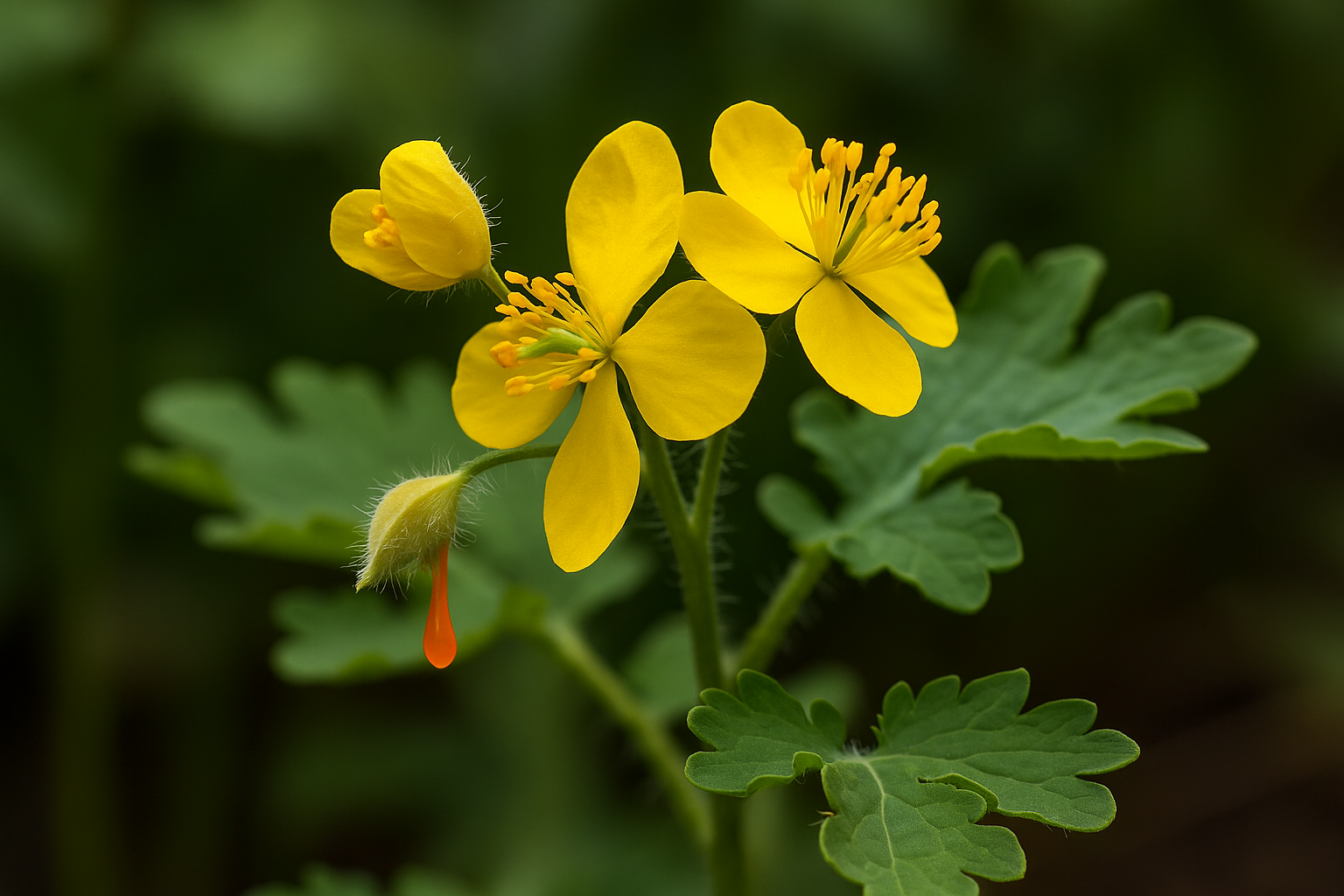
Botanical & Common Names
Latin / Scientific Name: Chelidonium majus
Common Names: Greater Celandine, Swallowwort, Tetterwort, Rock Poppy
Family: Papaveraceae
Origin & History
Greater Celandine is a perennial herb native to Europe and Western Asia, now naturalized across North America. Historically, it was a staple in medieval European herbal medicine and was often used to treat jaundice, gallbladder problems, and digestive disorders. Its bright yellow-orange sap earned it a reputation as a “cleansing” herb, believed to purify the liver and remove toxins. The name “Celandine” is derived from the Greek word chelidon, meaning swallow, as the plant was said to bloom when the swallows arrived in spring and fade when they left. Though long praised for its “liver-purifying” effects, modern toxicological research has revealed significant safety concerns.
Qualities & Traditional Use
Greater Celandine was traditionally used for bile flow stimulation, liver detoxification, and relief of digestive spasms. Herbalists valued it for its antispasmodic, choleretic, and mildly sedative effects. Externally, its latex-like sap was applied to remove warts and corns, owing to its caustic properties. Some European formulas also used small doses internally for gallbladder discomfort, but these uses have been largely discontinued due to its potential for toxicity.

Your Healing Begins Here
These guides focus on real women’s health challenges such as hormonal imbalance, mental wellness, inflammation, and everyday physical discomfort.
If you’re ready to stop searching for answers and start following a clear healing plan, these guides will help you take the first step on your wellness journey.
Toxic Components & Mechanism
The herb contains over 20 isoquinoline alkaloids, including chelidonine, sanguinarine, berberine, and coptisine. These compounds act on the nervous and digestive systems and can interfere with cellular respiration and liver metabolism. Chelidonine, while mildly antispasmodic, is also hepatotoxic, meaning it can damage liver cells with prolonged or excessive use. The toxic mechanism primarily involves mitochondrial dysfunction and oxidative stress, leading to inflammation and necrosis in liver tissue.
Risks, Dangers & Side Effects
Greater Celandine poses serious risks when taken internally. The most significant danger is liver toxicity, including hepatitis, jaundice, and in rare cases, acute liver failure. Reported symptoms include nausea, fatigue, dark urine, right upper abdominal pain, and yellowing of the skin or eyes. Other potential side effects include digestive irritation, dizziness, and numbness in the mouth or extremities. External use can also cause skin burns or severe irritation, particularly when applied to sensitive areas or open wounds. In rare instances, ingestion has been associated with neurological symptoms such as confusion or muscle spasms.
Contraindications & Who Should Avoid It
Avoid use if you are:
- Pregnant or breastfeeding
- Diagnosed with liver or gallbladder disease
- Taking hepatotoxic medications (such as acetaminophen, antifungals, or statins)
- Using sedatives, antidepressants, or antihypertensive drugs
- Undergoing chemotherapy or radiation therapy
- Under 18 years old
Even short-term use can cause harm in sensitive individuals, particularly those with preexisting liver conditions or poor detoxification capacity.
Best Practices / Precautions
Greater Celandine should not be used internally without medical supervision. Its safety margin is extremely narrow, and even small miscalculations can result in liver injury. If used externally for wart or callus removal, apply only a minimal amount of the fresh sap directly to the affected area and avoid healthy skin. Do not use continuously or on large areas. For liver and digestive support, safer alternatives include milk thistle, dandelion root, and artichoke leaf. Always source herbs from reputable suppliers to avoid contamination or misidentification with related toxic species.
Summary
Greater Celandine (Chelidonium majus) is a potent herb once celebrated for its liver-cleansing and digestive benefits, but modern research has exposed its dangerous side. While its alkaloids offer some therapeutic activity, they also carry a high risk of liver toxicity and systemic harm. Though it may still have value in carefully controlled homeopathic or topical applications, its internal use in raw or unregulated form is unsafe. Greater Celandine stands as a reminder that the line between medicine and poison often depends on dose, method, and respect for the plant’s power.
References
- National Center for Complementary and Integrative Health (NCCIH): Greater Celandine Overview
- National Library of Medicine (PMC): Chelidonium majus Hepatotoxicity Case Reviews
- Journal of Ethnopharmacology: Phytochemical and Toxicological Assessment of Chelidonium majus
- European Medicines Agency (EMA): Public Health Warning on Celandine and Liver Damage
- U.S. Food and Drug Administration (FDA): Cautions Regarding Celandine-Containing Products
- WebMD: Celandine – Uses, Benefits, and Safety Information
- Healthline: Greater Celandine Herb: Potential Uses and Risks
Herbal Precautions Disclaimer- The information provided in this herbal precautions post is for educational purposes only and is not intended as medical advice. Herbal information shared through SheFit Wellness reflects traditional use, general research, and holistic education.